IU alum and avid golfer David Tips uses his golf game to heal after suffering a life-threatening stroke. My dad has played the game his whole life, but it wasn’t until five years ago that golf became more than just a sport.
Doctors initially missed a dissection of the carotid artery in my dad’s neck. It started when he and I went for a run together in August 2020.
He went for a run every day, but this one was different.
When we got home, he immediately noticed a pain in his head, thinking he might have COVID-19. While his blood pressure was high, a CT scan of his head at the emergency room showed nothing wrong.
“The problem was they didn’t do the CAT scan of my neck,” Tips said, “and two days later, I had a stroke.”
He remained conscious during the stroke. But it robbed him of his speech, and it paralyzed his left side.
After just four days in the hospital, Tips moved to Spaulding Rehabilitation in Boston, where he did three intensive therapies a day: language, occupational and physical therapy.
Spaulding physical therapist Kathleen Salas suggested the adaptive sports program, but my dad initially dismissed the idea.
“I said ‘I don’t need that,’” Tips said. “And then, slowly, I began to say, ‘What if I did that?’”
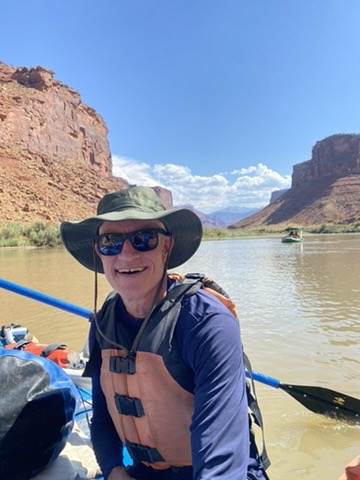
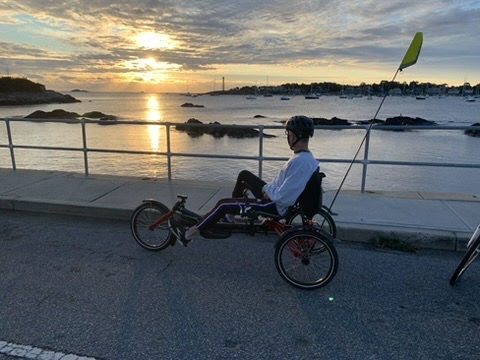
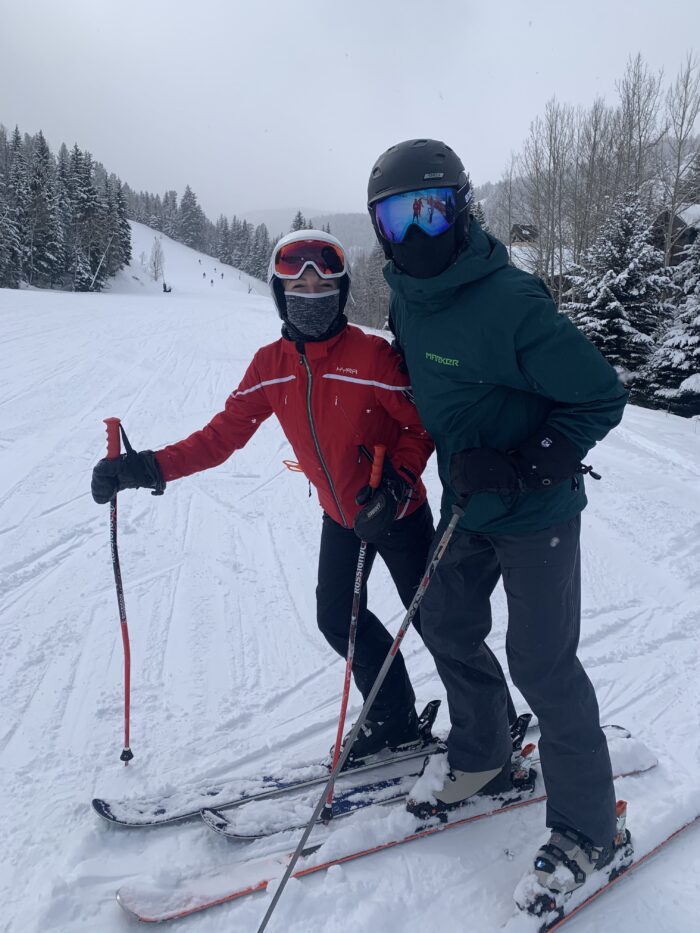
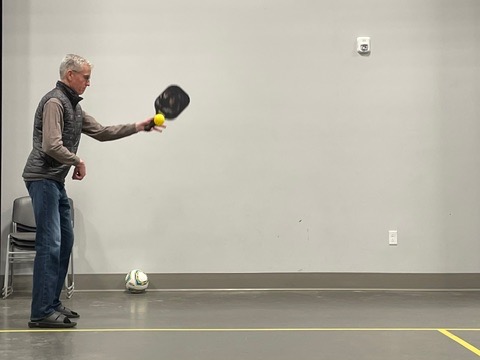
Since embracing adaptive sports, Tips has taken on kayaking, cycling, mountain biking, rock climbing, skydiving, skiing, pickleball and more (see photos below). But golf stands out as both his passion and his platform for inspiring others.
At Spaulding, my dad picked up a golf club for the first time since his stroke.
“People don’t go back for years to a sport they loved because they’re so afraid of how awful that’s gonna feel,” Salas said. “That never happened to your dad.”
IU alum and stroke survivor David Tips’ athleticism aided his recovery, but his community says it’s his motivation that inspires them most.
He started with a simple putt, and his athletic background helped his progress. But it was his mindset that set him apart.
“One thing you learn from David is, you know, if you really put your mind to something, you can really do it,” fellow golfer and friend Jane Melchionda said.
“His attitude is what’s so remarkable,” another golfer and friend Cy Kilgore said. “He’s a hero to me just to have that type of viewpoint.”
Within two years, Tips progressed from putting to chipping to playing full 18-hole rounds.
“Every time I play with him, I can see people from other fairways watching him,” Kilgore said. “They go ‘wow.’”
Tips and Kilgore teamed up two years ago for an 18-hole golf challenge. They raised money to support Credit Unions Kids at Heart, Melchionda’s nonprofit that funds research into pediatric neurological diseases, including child strokes.
Kilgore played the challenge using one arm, just like my dad.
“I made your father a very heavy favor in this match,” Kilgore said, “and rightfully so!”
Members of Tedesco Country Club in Marblehead, MA bet on who would win. My dad took the victory, but the real win of the day was raising $6,500.
“He took a little bit of suggestion and a little bit of practice on our end,” Salas said. “Now, he’s a mentor for the other guys that golf.”
Stroke survivor David Tips and friend Cy Kilgore each used one arm to play in an 18-hole golf challenge, raising money for research into pediatric neurological diseases.
Tips takes his golf game back to Spaulding, where he visits current stroke patients to give them hope. Sometimes, he even ventures back to the same room where he once received treatment.
“I was in here five years ago,” Tips tells them. “I couldn’t talk and couldn’t walk, but now I can, and you can too.”
Melchionda sees the impact Tips has on others who are where he was five years ago. She said she no longer thinks of his experience as a tragedy.
“It’s easier said than done,” Melchionda said. “But boy, when you get to that other side after you did it, he must wake up in the morning just with a big smile knowing what he’s accomplished.”
He made it happen, repeating in his head a favorite Winston Churchill line.
“You never, ever, ever give up,” Tips said. “I would not do it any other way now.”