INDIANAPOLIS – A former Ball State staff member is seeking legal counsel after getting fired from the university for a Facebook post she made criticizing conservative influencer Charlie Kirk.
INDIANAPOLIS – A former Ball State staff member is seeking legal counsel after getting fired from the university for a Facebook post she made criticizing conservative influencer Charlie Kirk.
Suzanne Swierc, the former Ball State Director of Health Promotion and Advocacy, is working with the American Civil Liberties Union of Indiana (ACLU of Indiana) to take action against the President of Ball State University, Geoffrey Mearns.
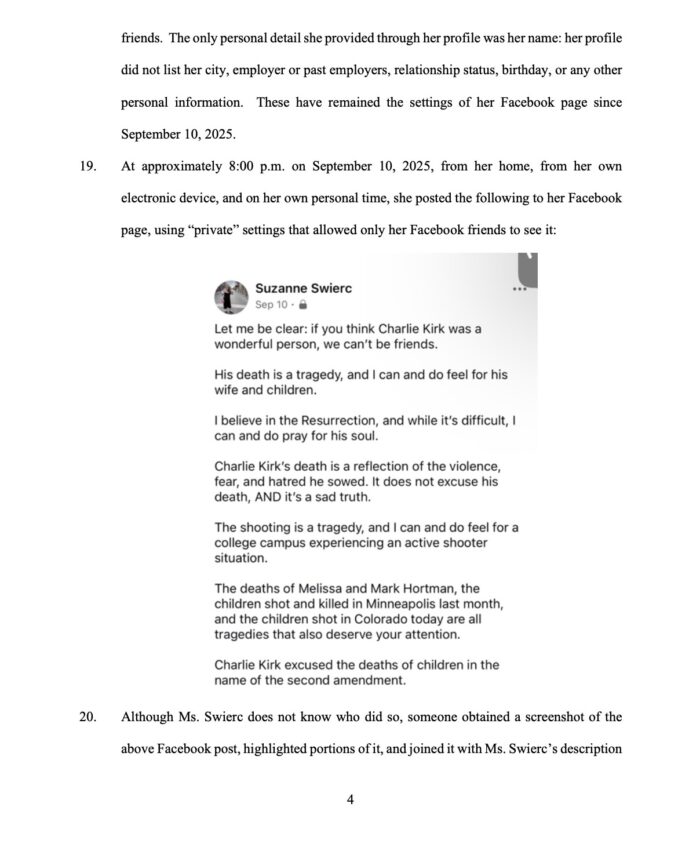
After Kirk’s public assassination, Swierc made a private Facebook post expressing sympathy for the conservative influencer’s family, but objecting to many of Kirk’s beliefs. In her post, Swierc said, “Let me be clear: if you think Charlie Kirk was a wonderful person, we can’t be friends.”
One of Swierc’s Facebook friends then screenshotted the post and shared it publicly, without Swierc’s consent. Within days, Swierc’s post was seen by thousands of people.
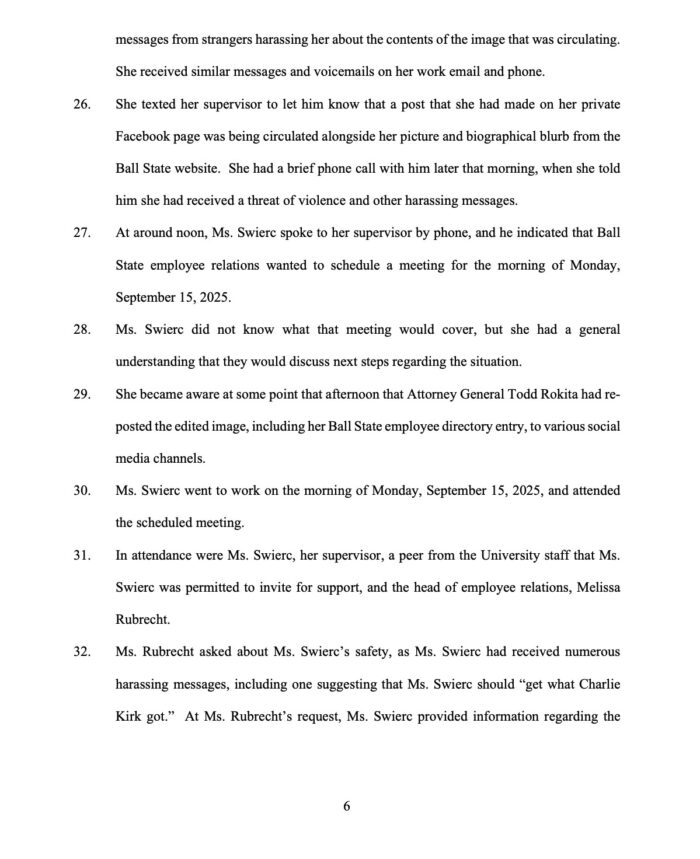
Swierc said it wasn’t long after the post was publicly shared that she received hundreds of hurtful comments, one of which was a death threat. Swierc recounted receiving a phone call early one morning where the caller stated her personal information, including her full name, address, and job title, and declared that Swierc “deserved what Charlie got.”
Suzanne Swierc addresses the challenges of losing her job and being involved in a controversy that has garnered national attention.
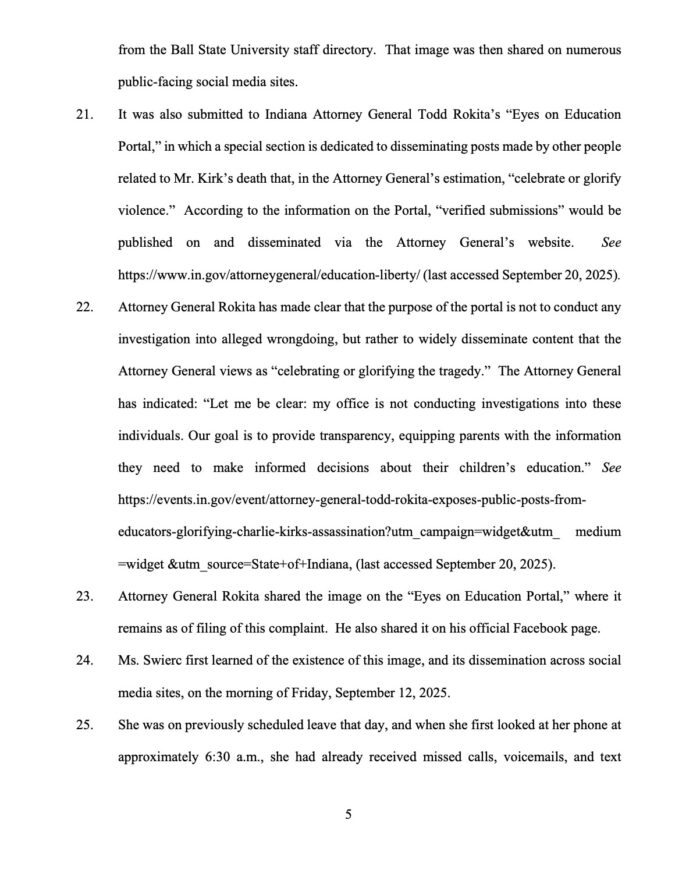
In addition to the online attention the post received, Swierc’s Facebook post was submitted to the “Eyes on Education” portal, an online form where people can file a complaint about Indiana educators. The portal was created by Attorney General Todd Rokita.
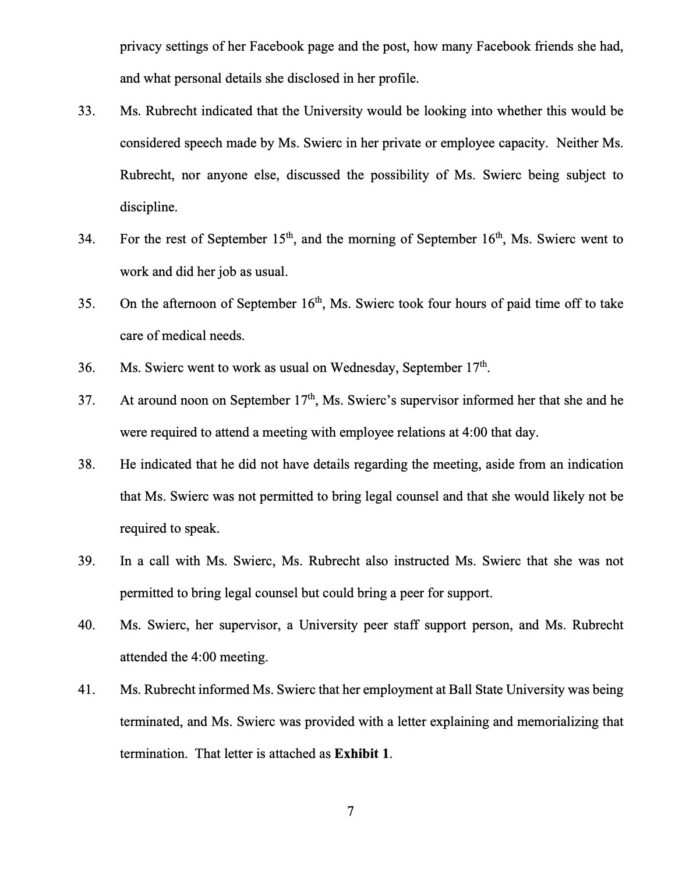
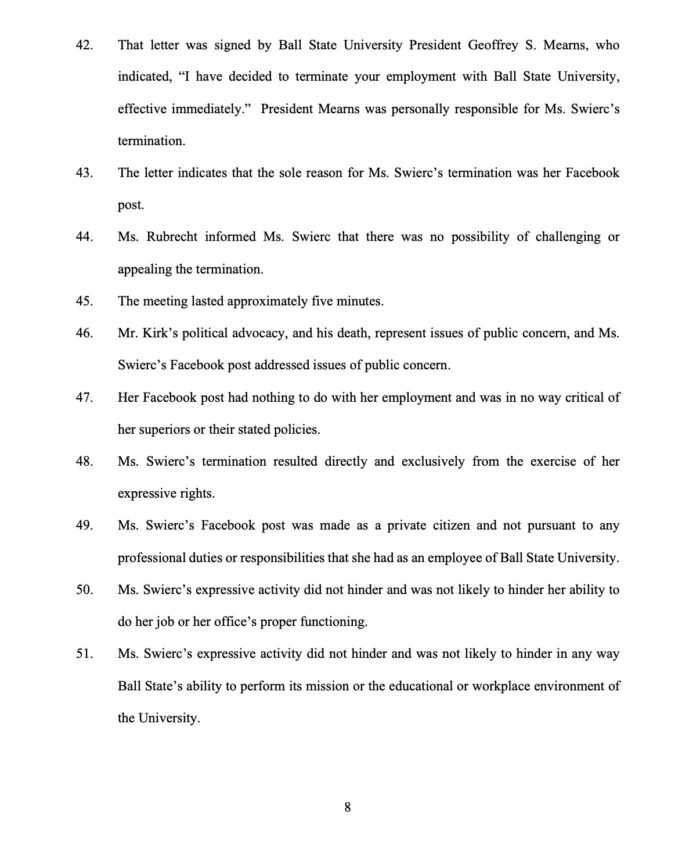
Following the distribution of her private Facebook post and a submission to the “Eyes on Education” portal, Swierc was fired from her job at Ball State University. Swierc claims her termination was solely due to her post about Kirk.
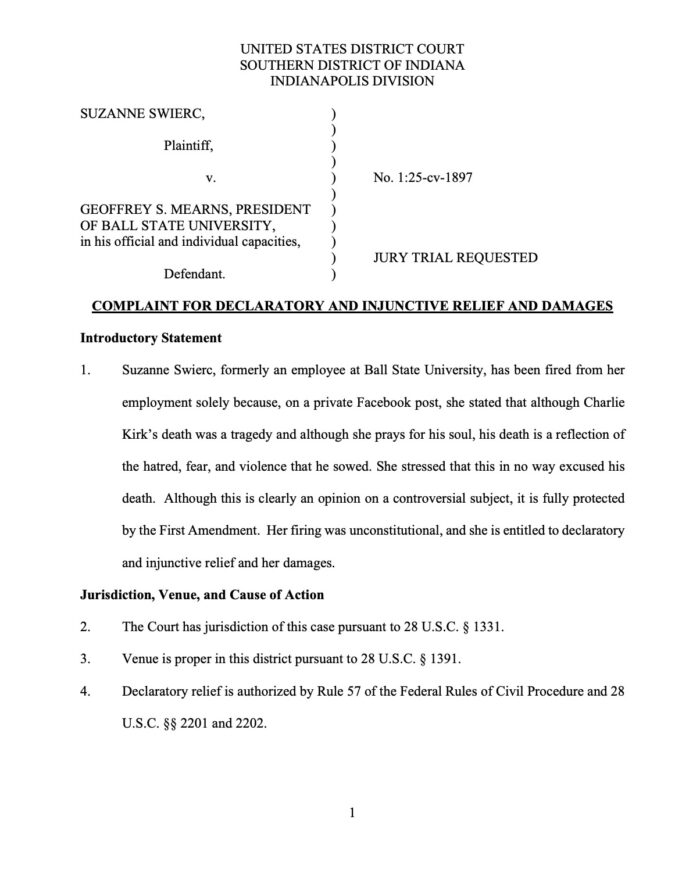
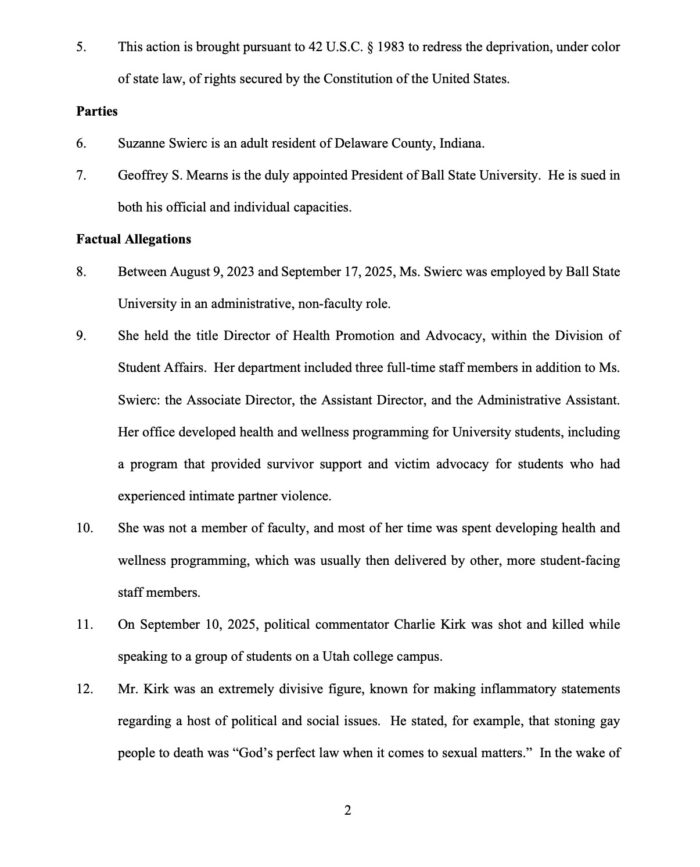
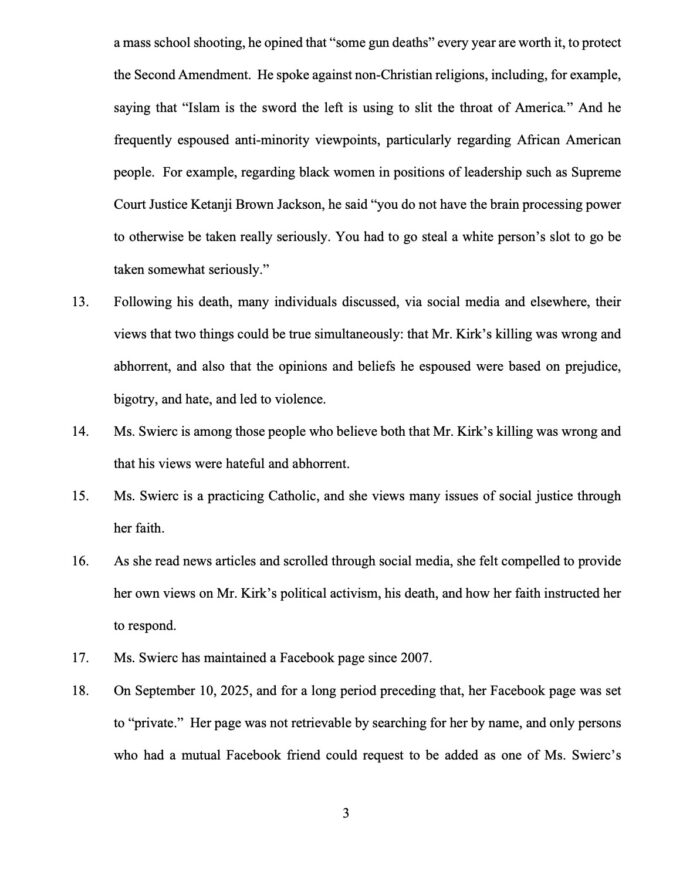
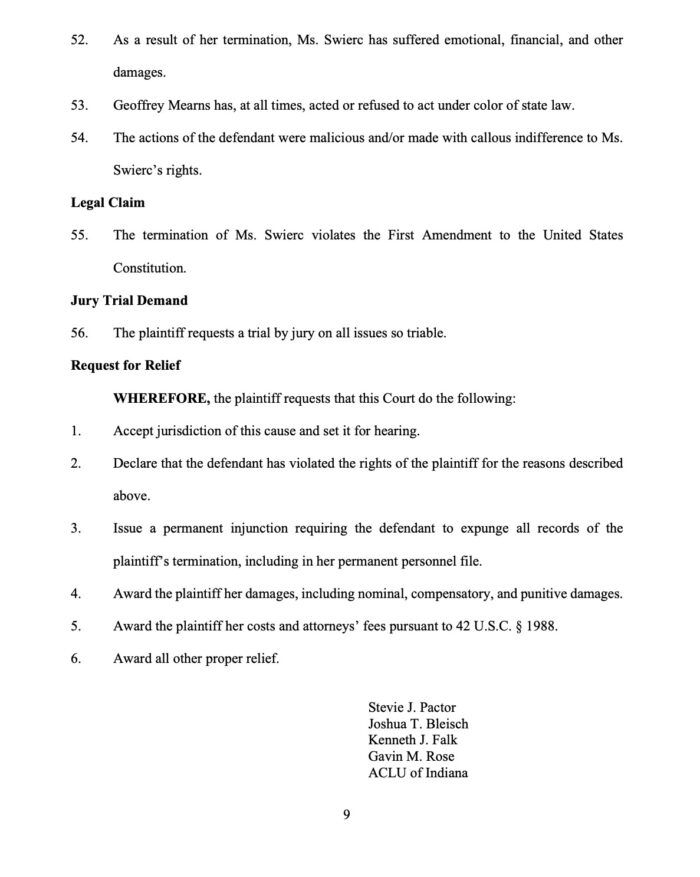
Since her termination, Swierc has obtained legal advice from the ACLU of Indiana and filed an official complaint against Mearns. The complaint claims that Mearns’s decision to fire Swierc solely because of her controversial post is in direct violation of Swierc’s First Amendment rights.
Swierc and the ACLU of Indiana are seeking nominal, compensatory, and punitive damages, which include emotional distress and loss of income.
While she explained the importance of receiving personal justice, Swierc explained that her decision to sue is bigger than herself. Swierc said she hopes this situation will compel others to continue exercising their First Amendment rights and push back against a chill on free speech in academic settings.