One in 8 women will be diagnosed with cancer during their lifetime. It’s one of the most commonly repeated statistics; printed on flyers, heard in commercials, recited at fundraising events. But behind that number are all the people who don’t get recognized. The husbands who suddenly become full-time caregivers, the parents who never expected to be in hospitals looking at their child with wires all over, the children who can’t fully understand why mom is sick and tired, and the friends who learn that supporting someone through cancer is way more than sending a text or buying flowers.
A diagnosis isn’t just for one person. It affects everyone around them.
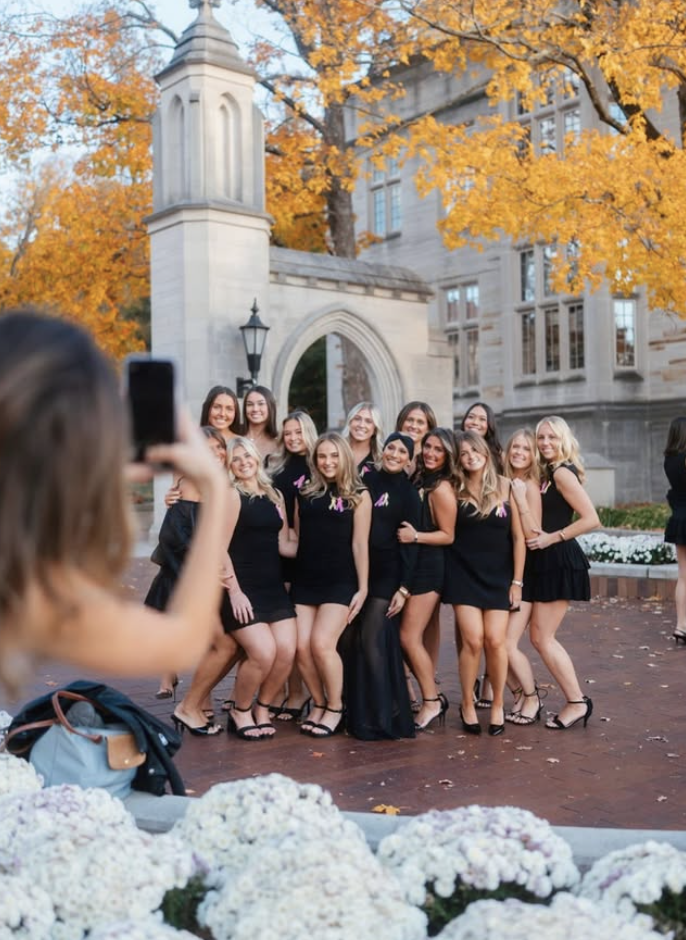
At Indiana University, that truth hits home deeply inside the Zeta Tau Alpha chapter, which is a national organization rooted in breast cancer education and awareness. For the members at IU, it’s not a vague statistic or a distant cause. Almost every woman in the house knows someone who has been diagnosed: a sister, a mom, a cousin, a neighbor, or a friend. A few were even diagnosed with a form of cancer themselves. For them, “one in eight” isn’t a number. It’s a reality that touches nearly every conversation, every event, every pink ribbon they pin to their shirts.
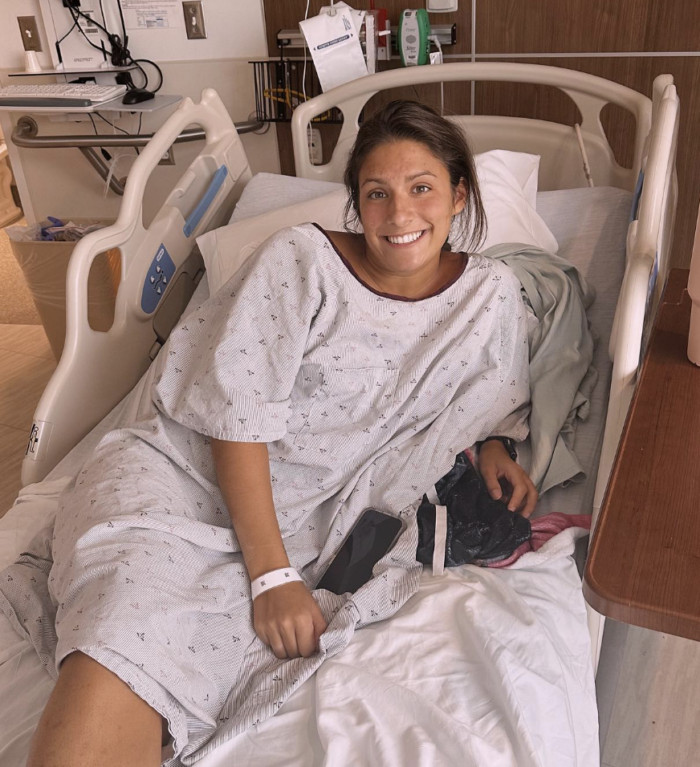
So when Kate Johnson was diagnosed with stage four soft tissue sarcoma cancer shortly after turning 20, it struck the sisters on a personal level. Her sisters didn’t have to imagine what the diagnosis might mean. They already understood the fear, the waiting, the uncertainty, and the importance of showing up.
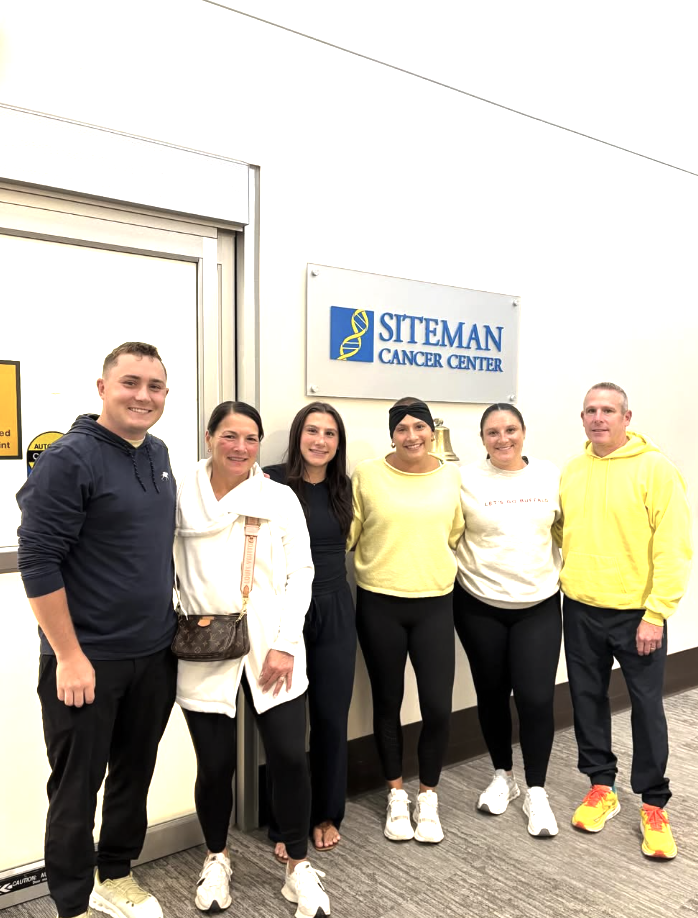
After one of her earliest chemo treatments, Kate returned home expecting nothing more than a chance to sleep. Instead, she stepped out of the car to find her street full of people. Dozens of her friends, neighbors, and family members had gathered there, wearing homemade shirts that read “Kate’s Krew”.
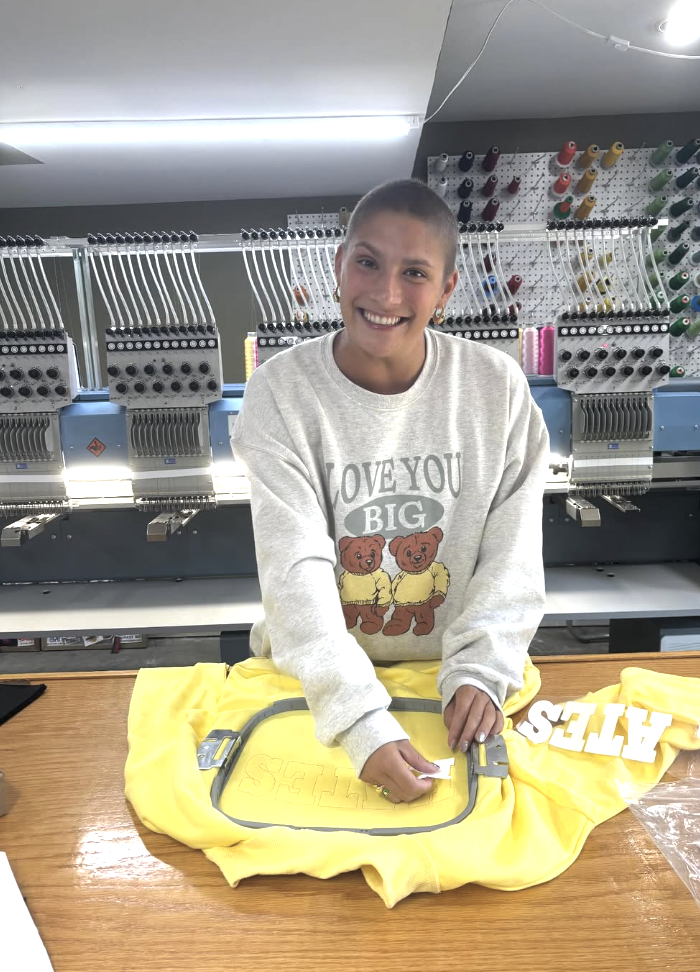
At the moment, it was meant to be just that, a welcome home party. A surprise to make her smile after one of the hardest weeks of her life. But Kate’s family had an idea. They created a platform for Kate, titled “Kate’s Krew”. Her Instagram and TikTok quickly blew up with support from her usual crew, and the accumulated others, some far outside Bloomington. They began sending messages of support and sharing similar stories.
Within weeks, Kate’s Krew became more than a group of people standing on a lawn. It became a recognizable name on campus. Then, a recognizable name beyond campus. Posts reached other states. Then other countries. Survivors sent advice and encouragement. People who had never met her donated, posted, or sent letters.
And through it all, the heart of Kate’s Krew has stayed the same: a group of people determined to make sure she never feels alone in her fight.
What is Kate’s Krew, and why is it so impactful?
Cancer isn’t one disease. It isn’t one mutation, one cause, or one predictable path. And for many students on IU’s campus, that complexity can feel confusing and irrelevant. But, for those who know someone fighting cancer, the science behind it suddenly matters. It becomes personal, urgent, and real.
That’s the connection between Kate’s experience and the academic side of Indiana University. The understanding that what students learn in lecture halls is directly connected to the battles people, like Kate, are navigating in hospitals only a few miles away.
Soft tissue sarcoma, the type of cancer Kate was diagnosed with, is rare in young adults. Its rarity is part of what makes it difficult; fewer cases mean fewer patterns, and fewer patterns mean fewer answers. Even within breast cancer, which is often discussed as a single condition, experts now understand that it is actually dozens of subtypes, each acting differently, responding differently, and evolving differently.
That’s where researchers like IU cell biologist Dr. Claire Walczak come in.
In IU’s science buildings, teams of scientists spend their days studying how cancer forms, spreads, and adapts. They look at how cells communicate, how they malfunction, and how they resist treatment. Their work doesn’t usually make headlines, and the breakthroughs aren’t always dramatic, but each discovery adds another piece to the puzzle.
And even though Kate’s diagnosis is not breast cancer, the science behind one type of cancer often informs the next. The more researchers understand the behavior of cells, how they mutate, how they invade tissue, and how they evade the immune system, the more targeted treatments become for all cancer types. Personalized medicine, gene mapping, and molecular imaging are just a few of the tools changing the landscape of cancer care.
Dr. Walczak breaks down how cancer begins and what is being done to try to cure it at IU.
Kate is a reminder that the world doesn’t stop for anyone, and bad things happen to good people. But her story also shows how when the going gets tough, the tough get going. The community has a way of rising to meet the challenges and support each other. From the women in Zeta Tau Alpha who have ‘stood by her in every high and every low’, to her family and neighbors, who helped create her brand while constantly being by her side to show support, to even the strangers around the world that have reached out with support for Kate’s situation, and follow her story, all of these people proved that Kate’s journey was never just her own.
Speaking with Kate Johnson felt like talking to human sunshine. She radiates positivity and optimism with every challenge she faces, and celebrates freely with every accomplishment she earns. With a person like Kate, it is no wonder that her entire community joins together to help show their overwhelming support for her journey. She believes that by sharing her own story, she can help others relate and be a source of support for them, because ultimately, no one should have to fight alone.