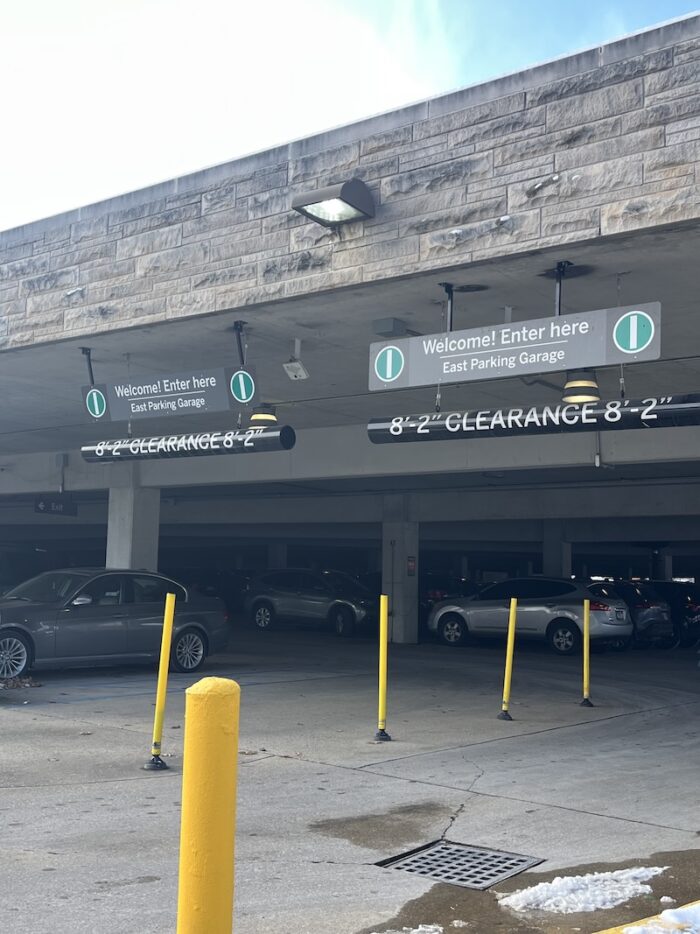
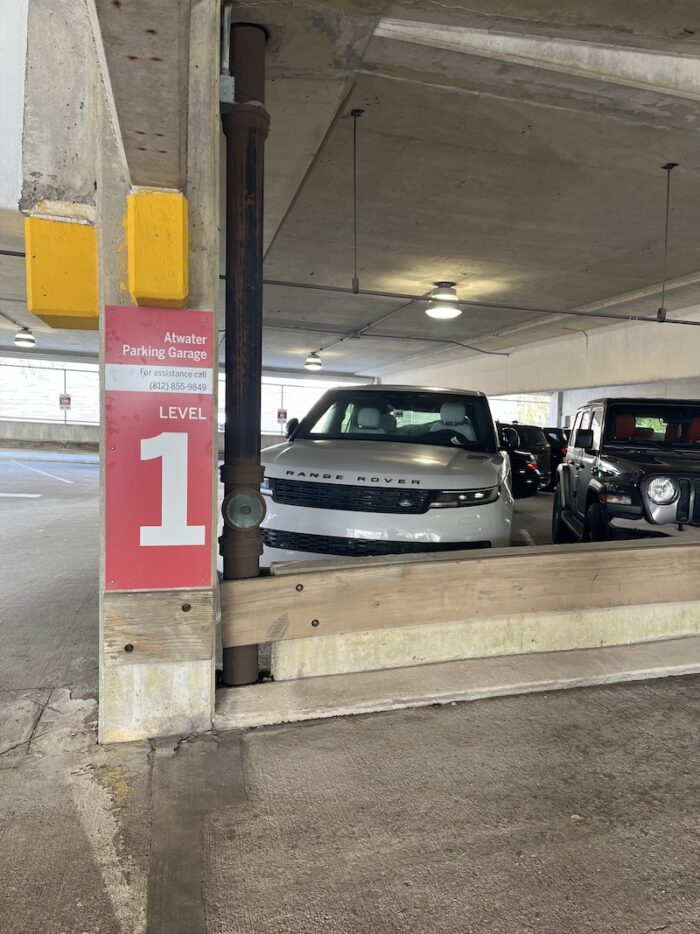
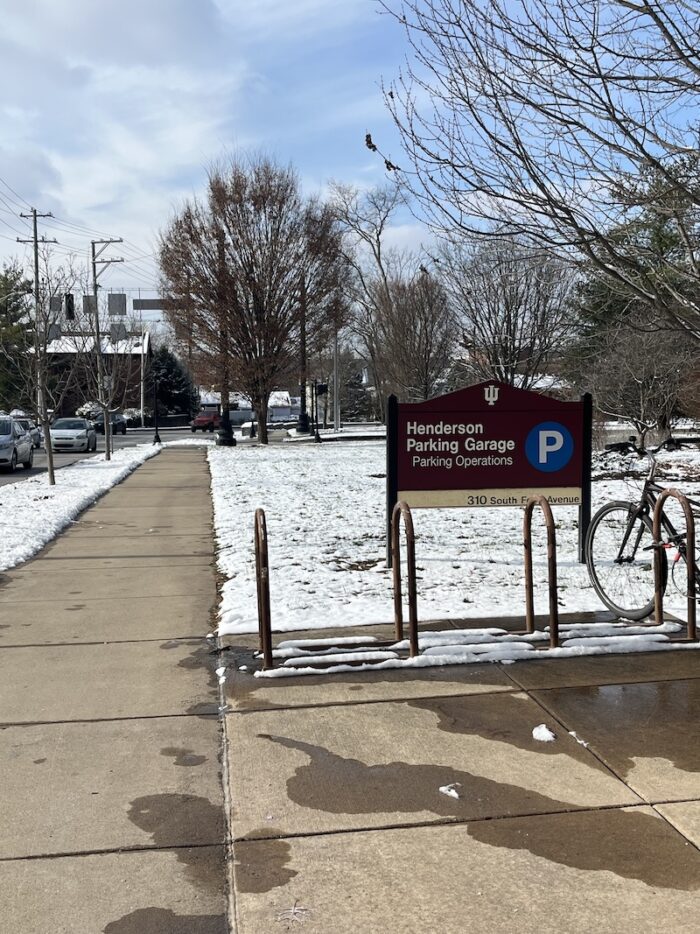
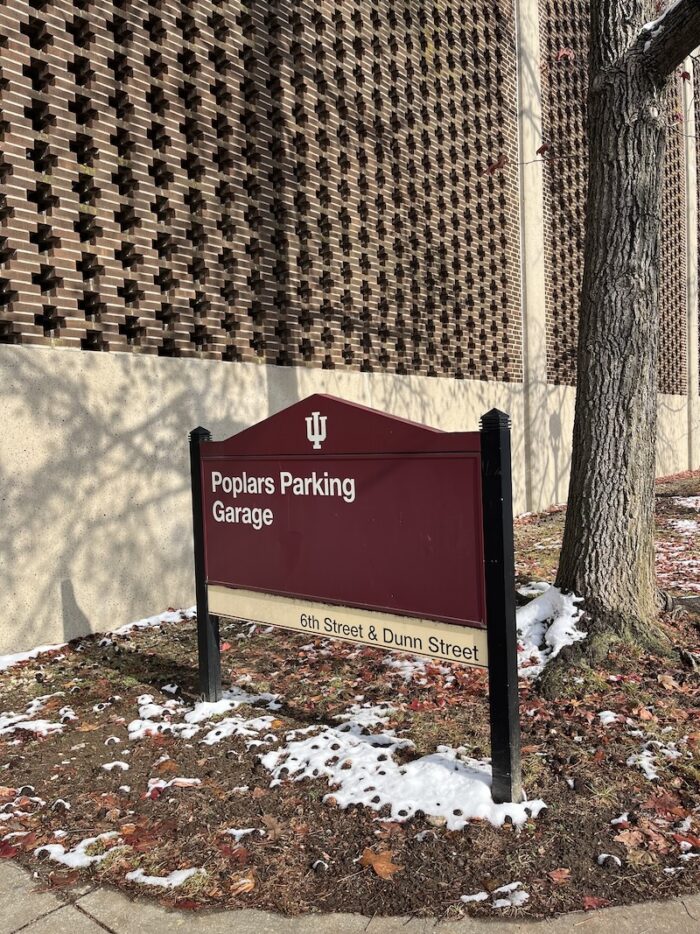
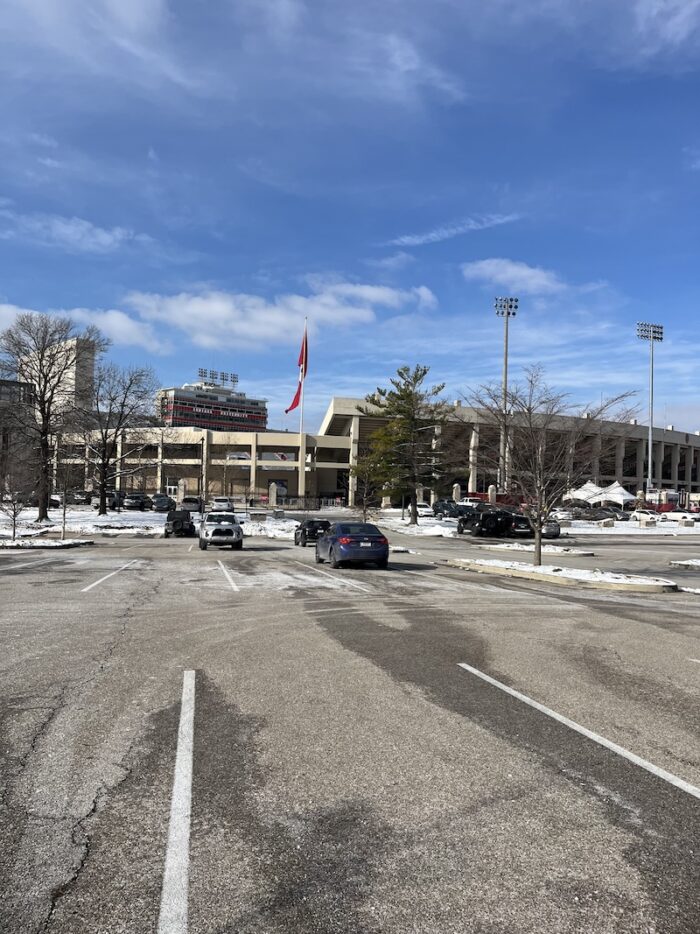
For many students, the search for parking on Indiana University’s Bloomington campus starts long before the first class does, looping through packed lots, following every hint of an opening, and wondering why a paid permit still doesn’t guarantee a space.
Students say the issue isn’t just finding a spot , it’s the time lost circling garages that fill up before most morning classes even begin. During peak hours, the most popular lots reach capacity quickly, leaving drivers stuck in long loops and competing for the few openings that appear.
“Last year I started bringing my car to campus and I expected a lot more space at the parking garages,” IU junior Rebecca Vidal said. “I’ve been looping around campus for almost 20 minutes and I still can’t find anything. It’s getting ridiculous.”
Vidal’s experience is one many students share. IU Parking Operations hears similar concerns each semester, especially as the number of student permits continues to exceed the number of available, convenient spaces. Most campus garages fill quickly Monday through Friday, often before mid-morning classes begin, leaving students to circle or move farther from central academic buildings.
Extra interview questions with the director of parking operations.
According to Amanda Turnipseed, director of Parking Operations, the shortage isn’t parking itself, it’s the convenient spaces everyone is aiming for.
“I wouldn’t say that student parking in particular has gotten worse,” Turnipseed said. “I will say that there are more student permits that we are issuing. More students seem to be bringing vehicles to campus.”
While IU continues to sell far more student permits than there are centrally located spaces, Turnipseed said the university does not cap student permit sales. Rather than limiting permits, they depend on students moving in and out of campus at different times to keep things running.
Turnipseed said students often overlook the Assembly Hall parking area. While it’s farther from the center of campus, she said those lots almost always have open student spaces, even during the busiest weekday hours.
“Even if you have to park farther out, there is always a bus running by Assembly Hall,” Turnipseed said. She noted that multiple campus bus routes pass the area throughout the day, giving students a consistent connection to the rest of campus without relying on central garages.
Students who plan to drive to campus must register their vehicle and purchase a valid permit. Information about vehicle registration, motorcycle permits, and bicycle requirements — including what students need to purchase a permit — is available through IU Parking Operations at https://parking.indiana.edu.
Parking permit costs at IU vary by permit type and campus role, with different rates for students, employees, campus housing residents, and visitors. Annual, semester, garage, and evening permits each have separate prices and availability. A full breakdown of current permit rates is available on the Parking Operations permit rates page at https://parking.indiana.edu/permits/permit-rates.html
Vidal understands that parking near busy areas is competitive, but she hopes the university will reconsider how many student permits it sells each year.
“Basically parking services should do better not to oversell any permits,” she said. “You buy a pass expecting a place to park, and you might end up being late to class.”
For some students, the lack of convenience pushes them toward alternative transportation. https://parking.indiana.edu/transportation-options/index.html. IU funds free rides on Bloomington Transit for all students, giving them the option to use city/campus buses instead of hunting for parking. But Turnipseed said that even those buses face crowding during rainy or snowy weather, when demand spikes across campus.
Parking Operations recommends students leave extra time before classes, explore less-crowded lots, or use bus routes when possible, especially if they are commuting from off-campus housing. Meanwhile, the university continues distributing parking permits according to availability, zone rules, and changing student demand.
As more students choose to drive to campus, the morning routine of circling, looping, and hoping for a spot isn’t likely to disappear anytime soon.