
News Story

Without NIL: College Athletes are Exploited Mentally and Physically

By Caroline Crawford, Jordan Campbell and Chase Dodson

Bloomington Indiana, ( November, 5th, 2024)

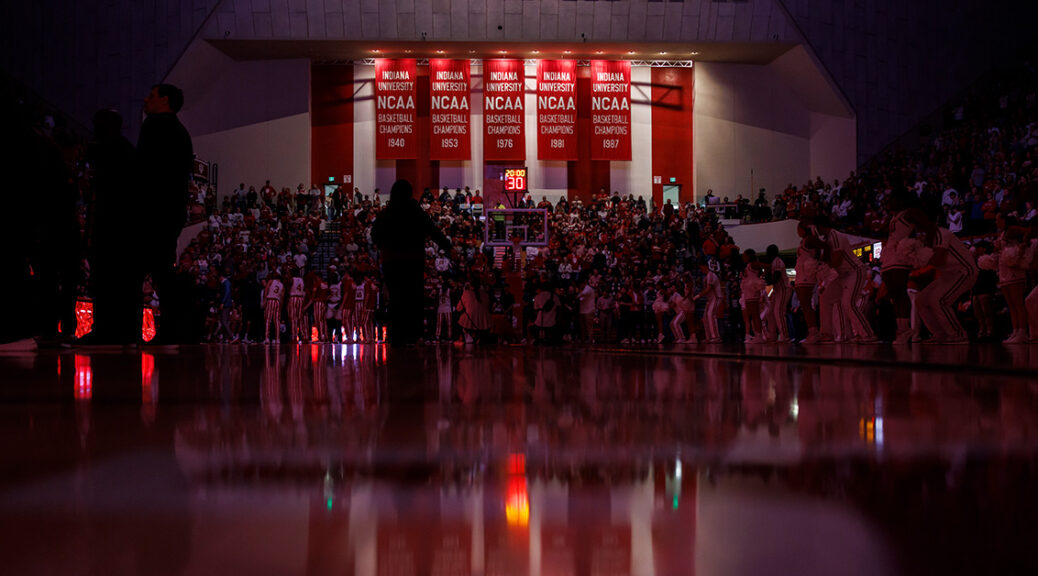
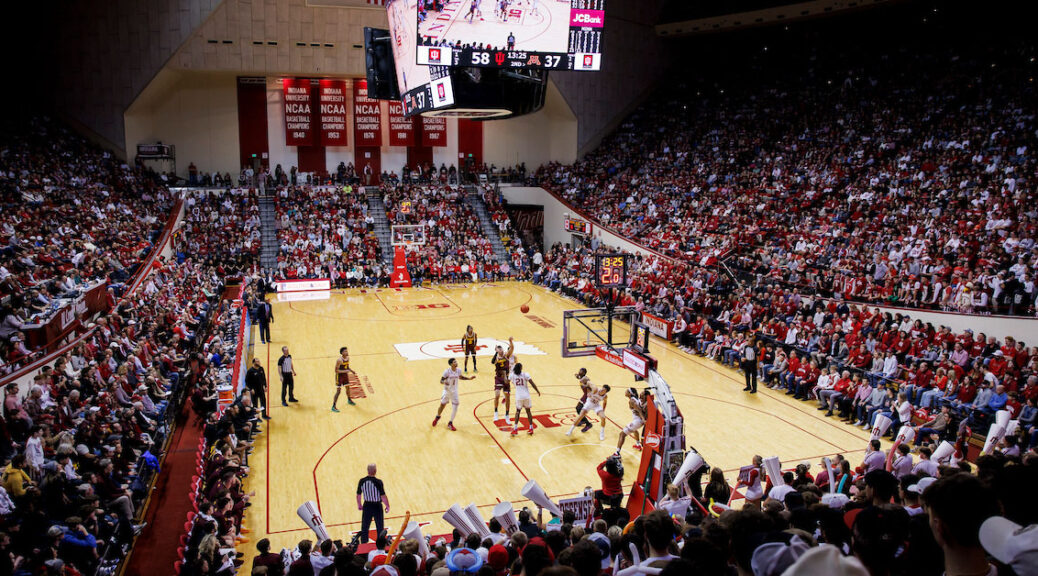
 The polished waxed floors squeak with the sound of shoes running up and down the court. The horizontal lines come together to create boundaries that make up the game of basketball. With people cheering in the stands, the players line up for their routine entrance. As the crowd sees their favorite players they get even louder and scream with anticipation for the game that’s to come. As the energy in the room intensifies, the game begins. 

With athletes seeming so untouchable, the topic at hand is wondering how easy it seems to be a college athlete and have your entire college tuition taken care of, a problem many college students worry about throughout their academic careers. With athletes being at the top of the social hierarchy, it seems to be the easiest job in the world, getting to do something they truly love and were born to do, while getting applauded and worshiped for it. Although the life of a college athlete seems glamorous and effortless, It’s actually quite the opposite with the discussion of how college athletes actually feel mentally and physically, while dedicating their life to playing their sport. Athletes’ troubles and challenges often go unseen, especially with the debate of Name, Image and Likeness (NIL).

Aj Harmon, Indiana women's basketball team manager discussing how athletes miss out on certain opportunities
Aj Harmon, Indiana women’s basketball team manager. Believes that the players miss out on a lot socially and put in a significant amount of work through practice, games etc, but receive little reward. Photo taken by Chase Dodson.

The hard work and dedication that every player consistently brings to each game is immense and deserves to be shown off and profitable, most would think. The game of basketball is seen as lots of effort and time, although the sport is rewarding, the discussion of how the game affects the players mentally is not a topic that the media usually covers. According to IU’s women’s basketball manager Aj Harmon “It’s a lot of time and commitment, and a major struggle being the time the players spend away from their families” said Harmon. The players spend most of their time conditioning, practicing and getting ready for games. It’s a full time job to be a college athlete, so that means the players have no way of getting a real paying job as their time as an athlete. Without sponsors and advertisements, the players are making no money from all their hard work and dedication. The labor they do becomes unseen without getting a paycheck at the end of the day.  The players give up their social life, including phone calls with parents, social gatherings, even something simple like down time. The struggle of trying to stay afloat is real for athlete’s while trying their best to play well.
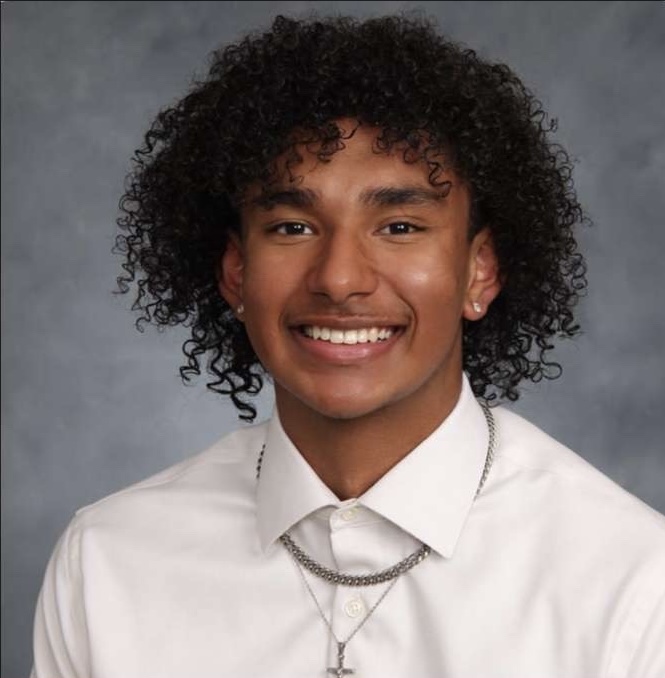
Darshan Thomas, freshman at Wayne State College picture
Darshan Thomas, freshman at Wayne State College, plays D2 basketball. With NIL, he is able to profit off of his name, Image, and likeness along with his dedication to basketball. Photo Courtesy of Darshan Thomas.

Mental health varies from player to player, but the pressure is almost constant. The need to be the best and always give their all becomes a never ending cycle of mental defeat. While working hard on the court and outside of it, the players have no real compensation for their hard work. The amount of work they put in with no reward leaves the players burnt out and tired. With the risk of injuries and pressure to be the best during every game, college athletes ask themselves “what’s the point?” While being a full time student, the stressors of personal identity and self doubt come to the surface. Stated by D2 Freshman basketball player at Wayne State College, Darshan Thomas “Many of us sacrifice our time and our bodies while on the court, it takes a toll on me mentally to constantly think about my performance and not my school work so the team and school can be good”. Putting the skill from each player aside, the main part of being a team is each individual putting their talent together to create one big talent. Representing a school is an honor and each player must give it their all each game. The stress of being good for something other than yourself is tiring and leads to burning out. The anxieties of being injured or performing badly is immense when playing for a high division like D2. Without NIL, and not being compensated for effort, time and stress, the players can reach a point where they feel like their time and effort is not being appreciated or valued enough to it’s fullest potential. 
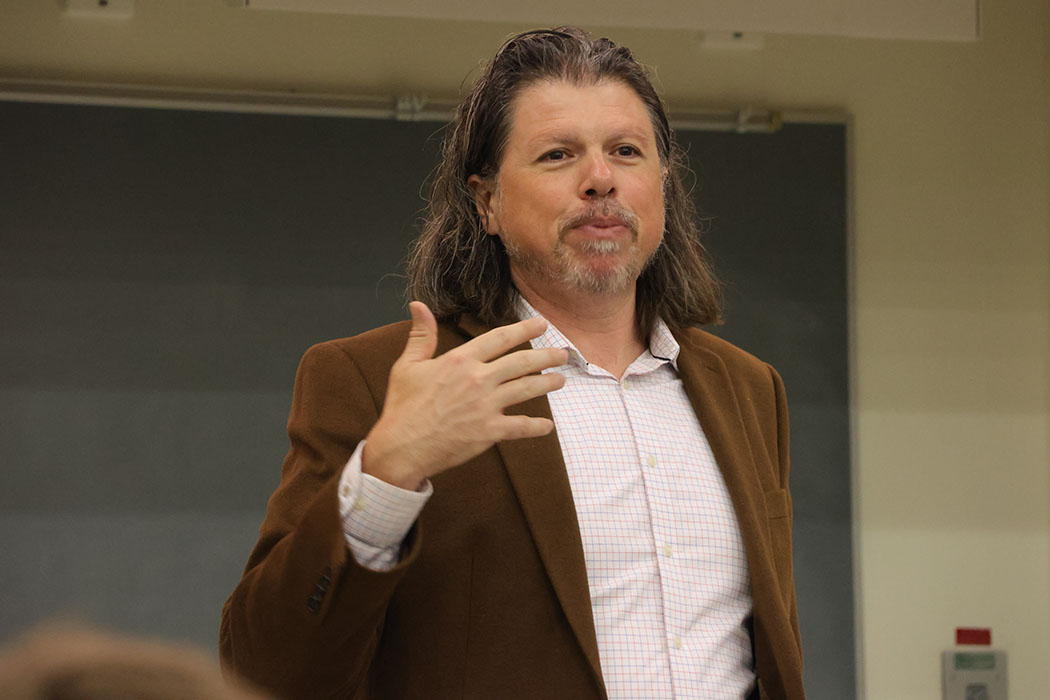
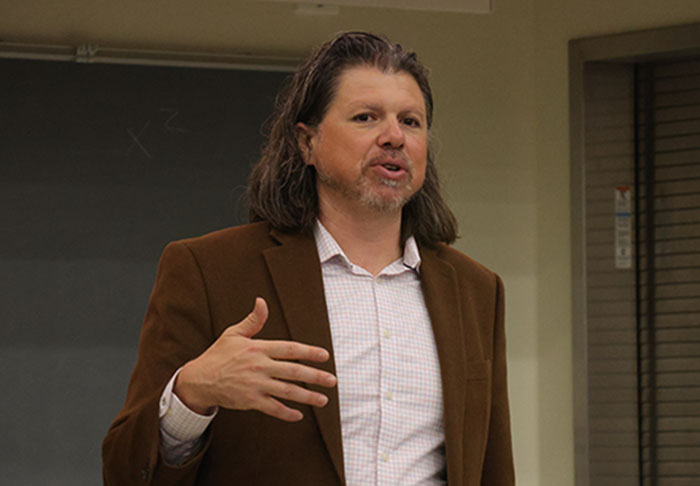
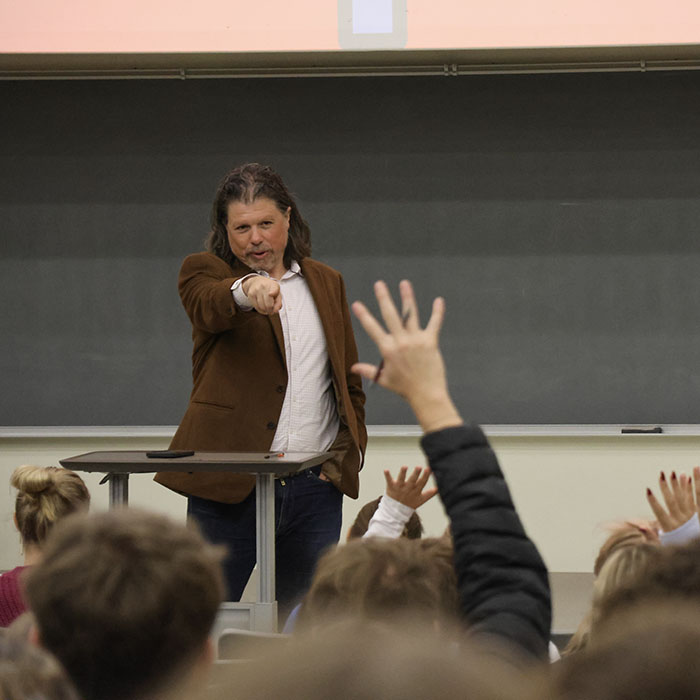
Associate Dean for Undergraduate Education for the Media School, Dr Clavio gives a press conference on NIL
Associate Dean for Undergraduate Education for the Media School, Dr Clavio gives a press conference on NIL. Clavio believes student athletes are faced with more restrictions with NIL. Photo taken by Mike Badrov.

According to the Associate Dean for Undergraduate Education for the Media School, Dr Clavio “you do not get the same rights as the other people that are college students, despite the long-standing public relations approach by the NCAA, which tries to argue that college athletes are simply students who happen to be engaged in athletics”. While full time college students get the right to profit off their name image and likeness, College athletes unfortunately do not. Although a college student who is engaged with athletics or with a particular field of study, they are seen as two different students. College athletics, specifically basketball, bring in a big sum of money through ticket sales, merch and much more. Ignoring what each individual brings to the table, the players don’t even make money off the games as a whole, which people pay to see them play. With the liabilities of injuries and the serious impact on mental health that comes along with the game of basketball, the players are doing all the work while getting no reward. Punishing athlete’s for being extraordinarily good at something, is wrong and unfair for those who fight through and overcome mental and physical challenges while playing their sport.

People of Kirkwood discuss how student athlete’s are impacted mentally through NIL, without getting compensated for their hard work and dedication.

  ###
NIL Decision Could Present Women With Unequal Opportunity to Benefit

  • By Grace Selesky, Zachary Thompson, Nick Milentis

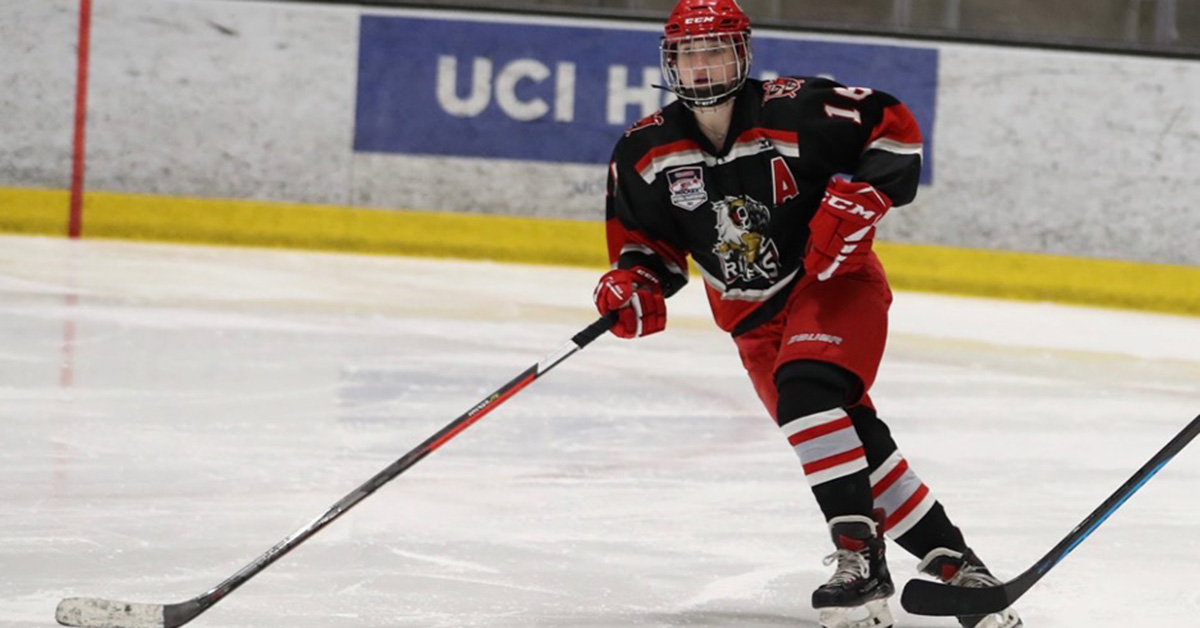
BLOOMIINGTON, Ind. (Nov. 5, 2024) –Breathing in the cold air, heart racing, game face on with a stick in hand, ready to break the tie and make the last shot on goal. The roars of the exciting game can be heard from outside the energized stadium. Sophia Hoover tightens up her grip holding her hockey stick, and makes a move. Her nerves are piercing through her body, as she attempts to beat the clock with fifteen seconds remaining. She makes her way toward the net with the help of her teammates, and goes for the shot. 

Sophia Hoover sets up for her shot, wearing her Griffins jersey from her last highschool club season. Hoover was an all around player on the team, giving her attention on social media and colleges.


A brief silence breaks throughout the entire arena as the buzzer blares, awaiting to see if Hoover’s shot was a success. The entire crowd and team jump to their feet, erupting in celebration for the team, they celebrate Hoover’s shot, breaking the tie for the game.  After the game, Hoover took to social media to celebrate her team’s big win. As a current freshman at St. Catherine’s University, she has seen how social media plays a big role with athletes Name, Image, and likeness deals and profits. “For me as a woman in a collegiate sport the main difference between men and women’s sports isn’t competition or skill, it’s the way we get treated outside the game. In today’s society we solely run our lives through social media”, said Hoover. She is not someone who currently receives profit off of her sport, Hoover knows a lot about the gender gap that is currently at place with men and women’s sports. “Women’s sports get little to no recognition for the work in the game, therefore, no matter the results no one knows. You will see numerous accounts and posts catering to men’s sports giving them all the focus win or lose”, Hoover said. 

Name, Image, Likeness, more famously known as NIL, grants high school and college athlete the opportunity and rights to be able to profit off of their own personal image. NIL allows these athletes to be able to profit off of endorsement deals, merchandising sales, advertisements, and social media sponsorships and partnerships. Although Hoover is not part of the percentage that gains profit from NIL deals yet in her career, she sees how big of an impact it has made on other athletes, changing the way we view athletes today than ever before, with most of this attention coming from social media.

Social media has also played a huge role in the likeness of athletes and different sports getting recognized more easily on a daily basis. This can be a breaking point for many athletes of today, as keeping up with their social media can be tremendously beneficial for their image as an athlete. The media is a simple and quick way of finding your favorite player on the team on social media to keep updated with them and their sport. This seems like a factor that would make the gender gap more equal, but with the more renown men’s sports having more viewership, the reality of this is going to put these sports at an advantage for their personal NIL.

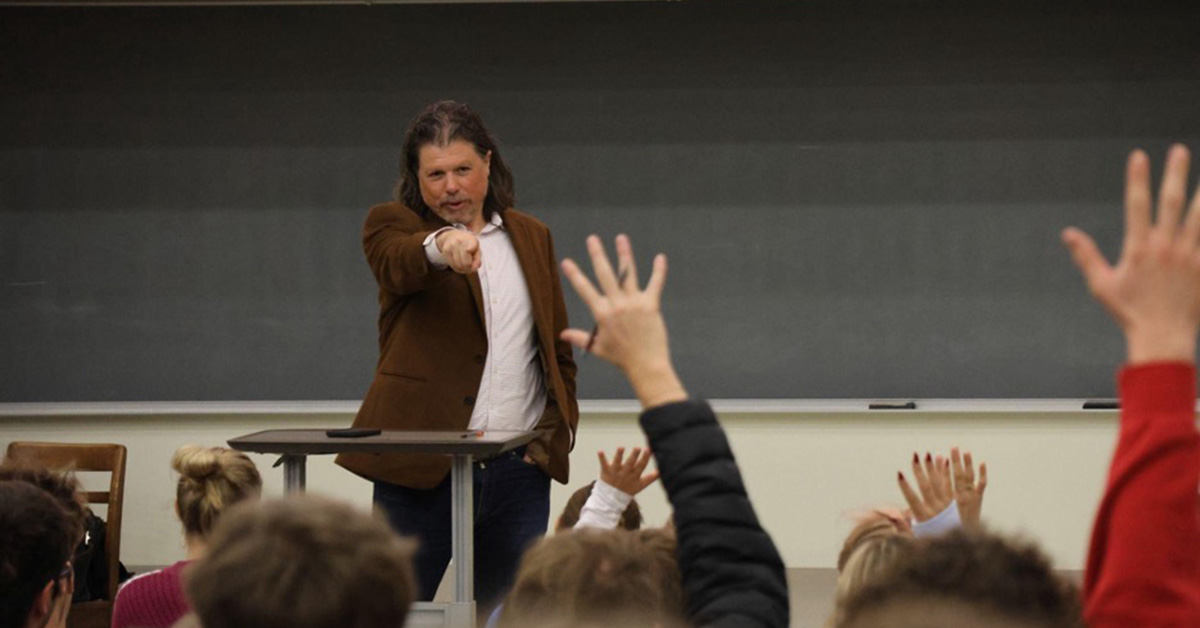
NIL has also recently began to be taught in high schools and colleges. With the way the media and society is changing, it has become a vital part to teaching and learning today. Recently, Dr. Galen Clavio spoke to a Story Lab 1 class and discussed his thoughts about NIL. As we know, college sports are becoming more popular as they are publicized, and using the athletes image to help promote the school gives the opportunity to reach larger demographics and a wider audience. Dr. Clavio, along with his many other roles here, is a Sports Media Professor, and has seen and heard an immense amount of different NIL deals, including with the gender gap. Even with the most popular women’s sports, they are still not even with the men’s version of the same sport. Clavio said, “There is clearly a ground swell of spectator interest in women’s sports from where we were 10 years ago, even 5 years ago. I think that was probably always going to occur as media became more decentralized.” Media is growing everyday, and although the gender gap has gotten better, we sometimes do not even realize how most of us view men’s sports publicity more than women’s.

Dr. Clavio, points to a student eagerly waiting to get their questions answered during his lecture at Indiana University. Clavio has worked at Indiana University for over fifteen years.
Clavio video clip: 17:45 – 20:21


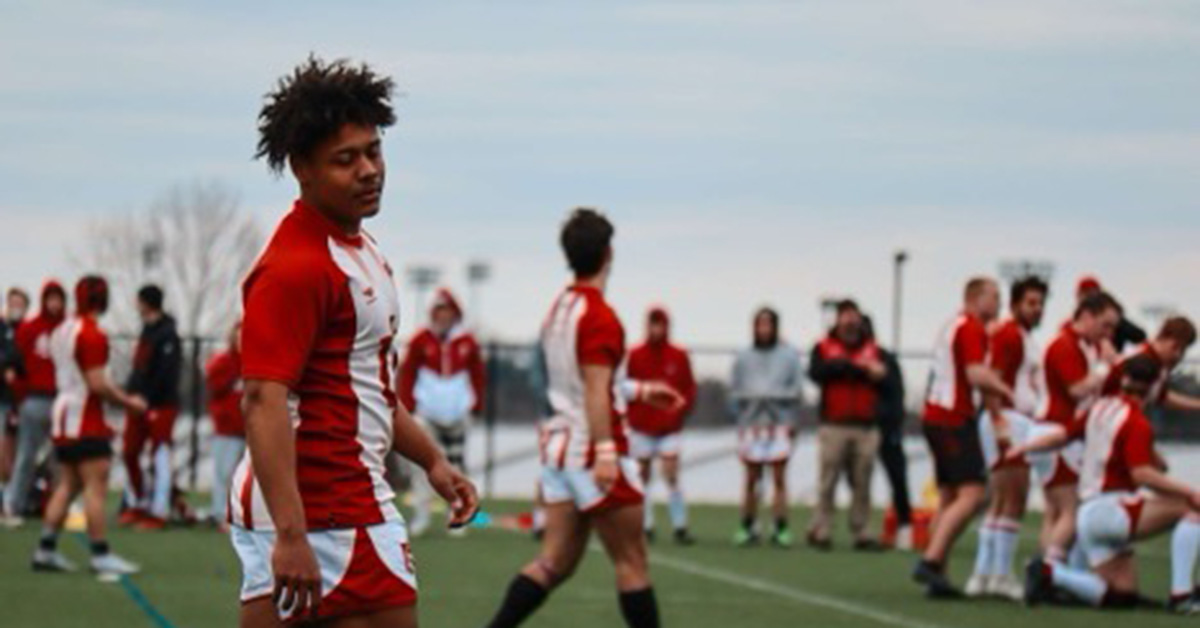
Indiana University Athletics have recently gotten a much wider audience as of this year, with the football team currently being undefeated. This has led to leaving the other fall sports being left in the dark, even the other men’s sports. Jose Torres, a player on the school’s rugby team, has not gotten much recognition as deserved. Torres knows and understands the gap, even being in a men’s sport. “It all ties into that intensity factor. I’m sure football athletes are paid higher here than basketball athletes and it’s just because they bring more heads to the stadium,” Torres said. Although Torres understands fully why the football team has such a big audience currently, he wishes the other sports, that could be doing just as well, could be seen in such a spotlight, compared to the other men’s and especially women’s sports.

Jose Torres pauses during his warm up to reflect, and say a quick prayer before his game. Jose got a full ride scholarship to play for the Indiana University Rugby team.
Jose Torres Interview


Social media has had the biggest impact on athletes and sports as we know today, the use of social media has increased their athletic accomplishments. Although this helps many athletes every year, the gender gap still involved within this leaves women’s sports in the shadow a lot of the time. NIL deals are much more than just a brand deal, they bring a whole new image to athletes and their career.

We went to the streets of the bloomington campus to get the opinions people have about the new NIL decision. We asked specifically to these people how they felt about the new NIL decision and how the new court ruling could present women with unequal opportunity to benefit from NIL

###

The Hidden Cost of NIL: Stagnant Growth in Varsity Sports

The Hidden Cost of NIL: Stagnant Growth in Varsity Sports

By Oliver Carr, Aparna Krishnan, Liam Greene

BLOOMINGTON, IN (Nov. 5th, 2024)

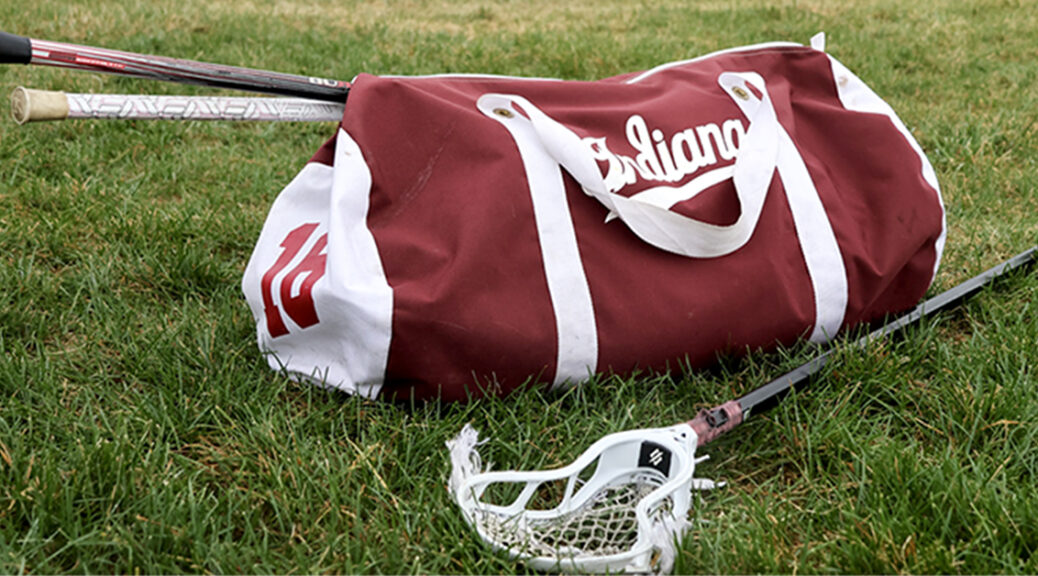
As the sun begins to set over the Sembower Recreational Sports Complex, the golden sunlight highlights the mounting pressure that begins to take its toll on the Indiana University Lacrosse team. In the midst of a chaotic, lung-busting and end-to-end game, the undefeated Michigan State Spartans begin to assemble what looks like the game-winning attack. In that moment, IU buckles down and makes a crucial defensive stop, and as IU are urged on by a rowdy, and record breaking crowd of 300, they rush to counter-attack.  With three seconds remaining on the clock, that crowd of 300 go crazy as IU scores to knock off the undefeated Spartans.

It’s a sporting moment in time, a moment that deserves so much more. More than the 300 diehard fans who stand in lieu of proper seating. It deserves more than to be played at the Sembower Recreational Sports Field, a nice field, but it’s a venue typically reserved for intramural sports. It’s a moment deserving of lights, cameras and reporters clamoring for interviews with the winning goalscorer. It’s a statement win, deserving of a NCAA Division Ⅰ program. Unfortunately, Division I programs aren’t formed from those moments of sporting magic, or the spirit of the players, it requires a variety of factors, chiefly among them student interest, and a whole lot of money.

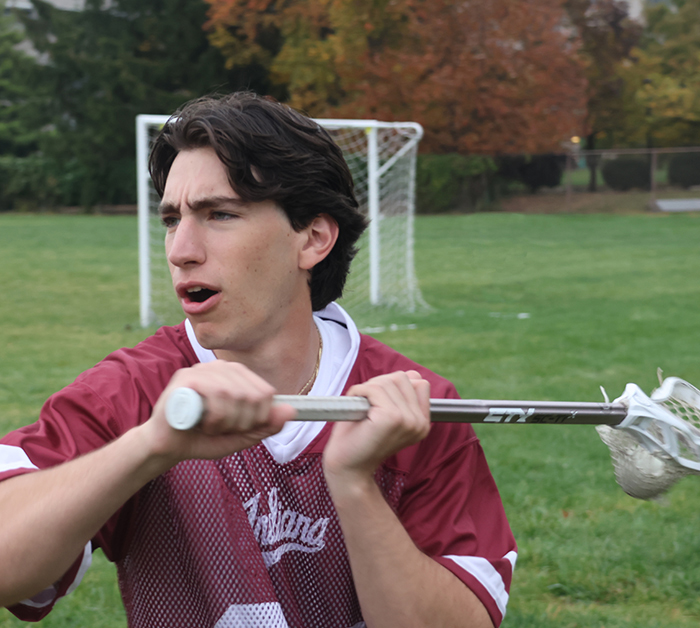
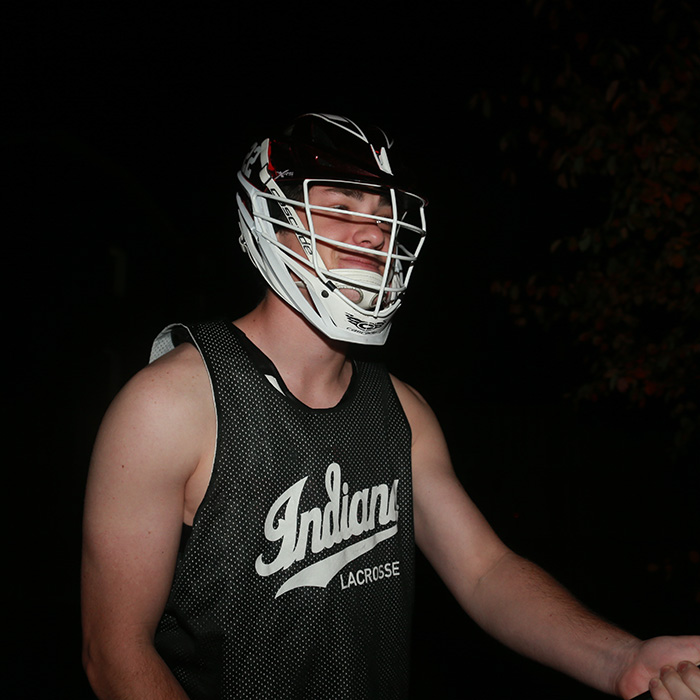
A Lacrosse Player prepares pass to his teammate.
Logan LeGrett prepares to fire a striking pass to his teammate. Legrett has experienced all IU Lacrosse has to offer,  including both the highs and the lows.

While the lacrosse team doesn’t control IU’s athletic department finances, according to Logan LeGrett, a junior midfielder for IU Lacrosse, thinks they can certainly hold up their end of the deal, “Lacrosse is in a good spot to be elevated,” LeGrett said. “The team is good, and we’d be playing in the best conference.” One of the biggest roadblocks for any sport looking to elevate the need for brand new facilities.  LeGrett recognized this and believed it to be a non-issue, “There’s not much specific to lacrosse that you need to add.” LeGrett said. “We can just use the soccer field, we play at odd times already, so we wouldn’t really cause them any problems.” Playing at the Bill Armstrong Stadium is a common dream among players and supporters alike, according to LeGrett, “Playing at the soccer stadium would be awesome, much nicer for us and the fans, nice field, nice facility.

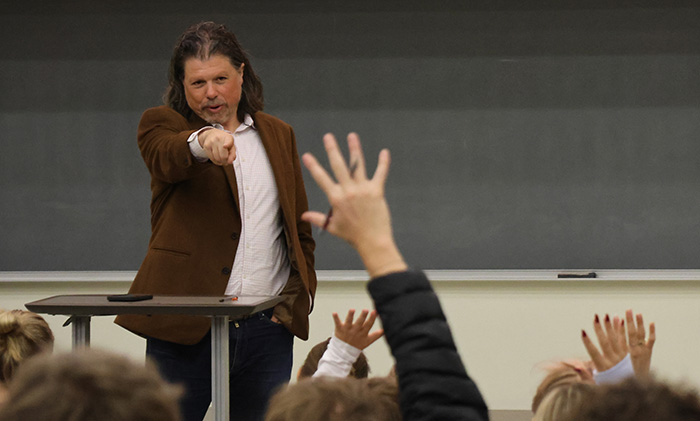
Galen Clavio points to a waving hand in a crowd of Junior reporters ready to ask him about NIL
Galen Clavio calls on a reporter in a sea of clamoring hands. A sports media professor at Indiana University, Clavio is deeply engrained in the world of sports journalism and by extension, NIL. Photo by Emma Pearce.

So all that stands in the way of lacrosse’s ascension to NCAA Division I is money. Money that is now more scarce in the wake of the 2021 U.S Supreme Court decision about collegiate athlete’s name, image and likeness rights. (NIL) That money seems to be moving away from athletic departments, and into the hands of athletes. The vast majority of revenue comes from success in football and basketball, and athletic departments will need to pay to stay competitive. Galen Clavio, director of the National Sports Journalism Institute believes this to be a grim side effect of NIL,   “The unfortunate truth is that most athletic departments now have to pay this $22 million a year in NIL money, and they have no additional revenue streams: all of the money is already spoken for,” Clavio said, “Which is probably going to result in a lot of cuts in athletic departments in what are perceived as non-essential areas.”

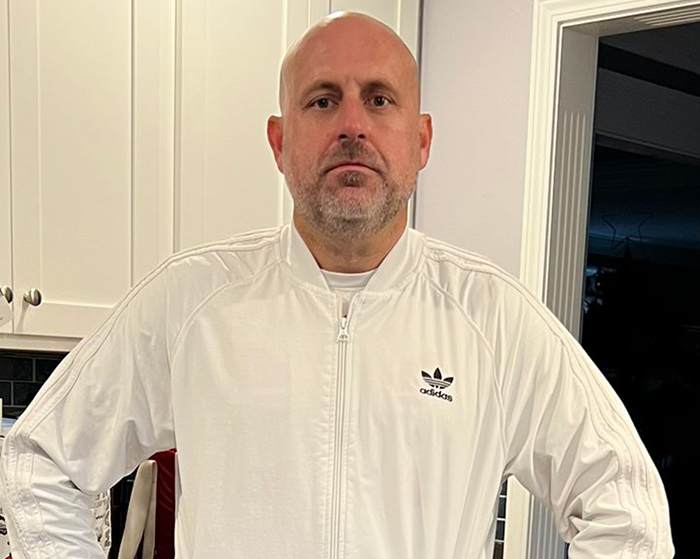
A photo to help visualize Jeremy Gray
Jeremy Gray poses before an Indiana Men’s basketball game with a white-out theme. As the Men’s Basketball Arena Announcer and Senior Associate Athletic Director for Strategic Communications, Gray is intimately familiar with the inner workings of NIL, and the media storm that follows it.

That’s not all, NIL is even causing those already spoken for revenue streams to start to dry up. Before NIL, donors, often referred to as boosters, would donate their money directly to the athletic departments.  Those same boosters that once lined the pockets of athletic departments are now being funneled into NIL collectives, organizations that are ensuring that the prominent players make their money. Jeremy Gray, senior associate athletic director for strategic communications at Indiana University has witnessed this problem first hand. “The athletics departments feel a little hard done,” Gray said. “Their money is starting to dry up.” 

What the future holds for collegiate sports in a world post NIL remains to be seen, but it’s already showing to have far reaching effects. For lacrosse, it’s made their outlook significantly dimmer in the new NIL landscape, but they’ll keep fighting to take their sport into the limelight of Division I. So for now, they’ll keep knocking off schools who seem to have much more to offer to their respective clubs, marauding around the country on their own dime and playing the sport they love. They’ll do it not for the money, but for the simple love of the feeling moments like scoring a last second winner bring to them.

Many people falsely claim that its destroying the integrity of college sports, and many blindly think its doing only good. In reality,  NIL is an extremely complex issue, that has both positives and negatives.

Elevating The Game: N.I.L. Strategies for Success


By Cooper Inskeep, Sloane Killinger and Jilly Hilderbrand

BLOOMINGTON, Ind. (Nov. 5, 2024) – High schools are feeling the impact of NIL as student-athletes explore endorsement deals and brand partnerships. This change is reshaping how recruitment works, affecting athletic programs, and redefining the high school experience for young athletes. The ideas behind the NIL structure are shaping the economic shift in 16-23-year-olds in ways that nobody would have expected.                                 

Jim Inskeep, Carmel High Schools Athletic Director, reflects on the different impacts of high school athletes. The NIL ruling can be a big change for high school athletes since they are getting money up to millions of dollars. (Photo by Carmel High School Photogrphy)

With the continued success of athletes the more money and fame that is expected with the success. But more prevalently is becoming an issue among high school athletes and high schools in general across the country. Kids nowadays are seeing deals getting offered to them around sums of a million dollars, just to go play a sport for a college. This high demand has been seen significantly at Carmel High School, where Athletic Director, Jim Inskeep is seeing the change happen right in front of him, “Over 20 years ago when I started the athletes loved the game and did not even have thought about money, now it’s become. How are we going to market our best athletes so that they can make themselves money?” After talking to Jim and finding out more information about the state of where NIL was at the high school. He brought up how quickly it’s changing at the college level and as a result.

This evolution in college athletics has happened at such a rapid rate that colleges are still trying to understand it themselves on what steps need to be made. During the early part of 2024, the Sherman Act was taken to court by Tennessee. The Sherman Act is to protect consumers by promoting competition, keeping prices down, and maintaining quality. This Sherman Act was enforced by Tennessee which opened up and went to the NCAA. This court case allowed many universities to thank Tennessee for opening the floodgates and being allowed to use NIL funds “legally” to recruit players. College and high school athletes after this case now were allowed to openly talk about how much they receive as well as receive funds from other sorts of endorsements.                   

Tyler Lillard leads his first sponsorship with Savage Apparel. Before the 2021 NIL ruling, Lillard wouldn’t be able to accept the contract based on the rules of the NCAA. (Courtesy Photo by Indiana University Athletic Department)

As in car dealerships and advertisements on TV. As well North Carolina just had an order signed into effect, that allows public school athletes in high schools the legal right to earn money off their NIL. On October 1st, a decision from the superior court judge set a path to reverse a policy that blocked high school athletes from making a profit off NIL deals. This ruling came into effect after 5 star quarterback, and the No 1. Player in the country for the class of 2026 Brandon Faizon filed a lawsuit with his family to try to obtain marketing for himself in the new high school landscape.

Dr. Galen Clavio hammered home this idea of athletes being to market themselves and making it an effort that players get paid, “The illustrated ametuer model is dead.” This model that has been followed for centuries before has been in place up until 2021 to “protect” college athletes. This process, which has now been adapted to the NCAA, has shown a new way for athletes to get paid while continuing to play their sport. But what makes this such a tricky situation to handle is how universities are going about paying players. It’s now a war of nutrition for the top universities getting the top players from across the country. Clavio made this clear in his press conference about where the state of college athletics is going, “It’s a game between 20 million dollar rosters.”                       

Dr. Galen Clavio answers a question regarding NIL in a recent press conference.
Dr. Galen Clavio answers questions regarding NIL at a press conference for IU Media students. Clavio is the Associate Dean for Undergraduate Education for the Media School. Photo taken by Emma Pearce.

Rumors swirling around how much the top universities are paying for their athletes. Ohio State, Texas, Alabama, and Oregon are just some of the teams that have been rumored to have these funds for football. Other universities have not been able to make the transition as easy as others have. Across the nation have had to deal with closing down certain sports due to having to create budget cuts to bring in money for more income revenue sports. Because of this, many of the different ways the NIL situation is being handled from High School to College, has caused questions to arise about the next steps of NIL. These questions ultimately hold the athlete’s futures in their hands and will go down as a sports-defining moment either way it continues to unfold. 

https://youtu.be/0c7RQwbA1fk

On the topic of NIL, we asked a couple members of the IU community their opinion. They shared their thoughts on the topic of managing NIL in a better way.

###
 

DOES NIL NEGATIVELY AFFECT COLLEGE ATHLETES MOTIVATION?

By Kol Popkin, Carter Moran and Erika Watt

BLOOMINGTON, Ind. (Nov. 5, 2024)

Kai Connor massages his temples as he looks over the list of multiple colleges that have reached out to him for the third time. The countless years of memories on track teams throughout his life playing in his head. Alabama, IU, Purdue, Columbia, and more had invited him for unofficial visits offering him differing athletic scholarships and promises. Ideas of money, publicity, and deals swarmed his mind, the dim lighting of his room starting a slight headache. Connor knew prospects of making money off of himself in college could be a genuine factor in picking his future.

His fingers tapping the desk as he took in every coach and teammate’s opinion that’s been said to him. Through all the confusion of the picking and choosing recruitment process, the only thing that provided clarity was remembering his love for running. The dedication and passion he’d put in to get where he is today further leading his motivation to continue past high school. With his competitive nature and love for track, he finally knew what college he wanted to pick and why. 

In 2021, the NCAA changed its rules to allow college athletes to profit from their name, image, and likeness. Taking away these restrictions after so many years of them being in place left many athletes and professionals in the field questioning whether this will change the motivation of athletes. Will effort levels decrease or increase if the ability to make money is available to them? Are athletes performing for the wrong reasons? We talked to multiple athletic experts on their understanding and thoughts on this.

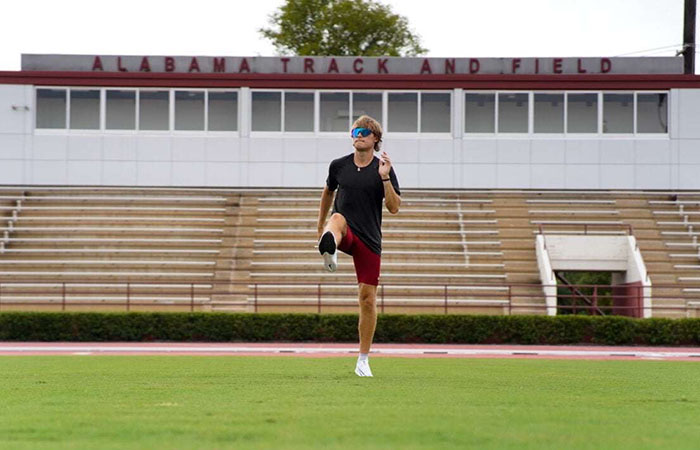
athlete kai doing warmups
Kai Connor, junior track and cross country athlete at the University of Alabama, completes his warmups before practice. Connor expresses that making money based on name, image and likeness makes the sport more enjoyable. Photo by Jacob Lucas

Junior track and cross country runner at University of Alabama, Kai Connor, shared his own NIL experience and gave us his take on how making money affects college athletes. He has had involvement in deals with brands such as Reebok, CVS, and HeyDude. With the many opinions surrounding enjoyment, motivation, and pressure with NIL, we asked him how he thinks deals have affected the way athletes enjoy they’re sport. Connor said, “Not too many downsides when it comes to making money because that’s how it always should’ve been. You always should’ve been able to promote yourself on your own and reach out to companies. In sports you can only have a certain amount of scholarships, but now with NIL you can put more kids on full scholarships which is helpful. Taking away financial stress definitely increases being able to enjoy your sport.” While it could be believed that having the ability to make money at a younger age would add more pressure, Connor highlights how helpful NIL can be with financial burdens for college students. The recruitment process is also very controversial given schools that can offer more money would get the best players. However, players’ reasoning for picking colleges and motivation for their sport cab be a lot more complex than that. We see that in Connor’s situation. Knowing Alabama just finished 4th in the nation last year in track and is a top 10 program in cross country, Connor came to be pushed athletically. He said, “I wanted to be challenged, you know I didn’t want to be like the best guy coming in. It definitely makes you compete harder.” He further points out that his reasoning for picking such a competitive program was related to passion and work. 

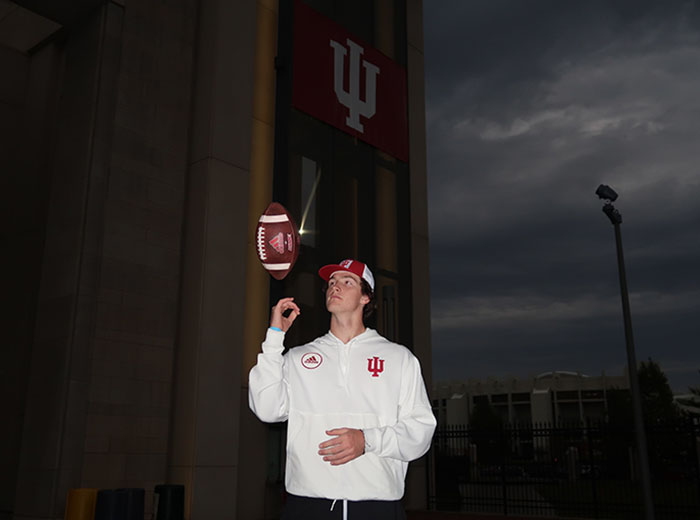
Tyler Cherry tossing a football up in the air
Tyler Cherry, Freshman quarterback at Indiana University, tosses a football in the air to pose for a picture. Cherry is familiar with NIL and shares positive feedback on the matter. Photo taken by Erika Watt

As well as track, NIL deals are very popular in football. We interviewed IU Bloomington’s backup quarterback Tyler Cherry. He described how since he’s only a freshman, his personal experience is limited. However, he still has a lot to say around the controversy of college athletes making additional money. When asked if he thinks NIL deals will impact the future of college athletics he said, “I think NIL deals are the entire future of college athletics. I think that’ll affect a lot of recruiting situations if the schools are close, like whoever offers more money might end up getting the recruit to come to their school.” Cherry believes, like many others do, starting to make money at that age will affect the process surrounding applying and choosing schools for high school seniors. However, his beliefs for college athletes such as himself differ. While he believes NIL has completely changed the game of football, when he was asked if he feels NIL opportunities have affected his motivation to compete he said no. “I approach it the same, just want to do my best and if you’re playing good you can get some opportunities. I think some athletes may be more focused on NIL, but it doesn’t really affect the way you train. Like in high school, it’s just football that you love to do and want to do. But in addition to that, you can make good money and get opportunities off the field.” This simple statement describes how love for a sport can outweigh money-making aspects. 

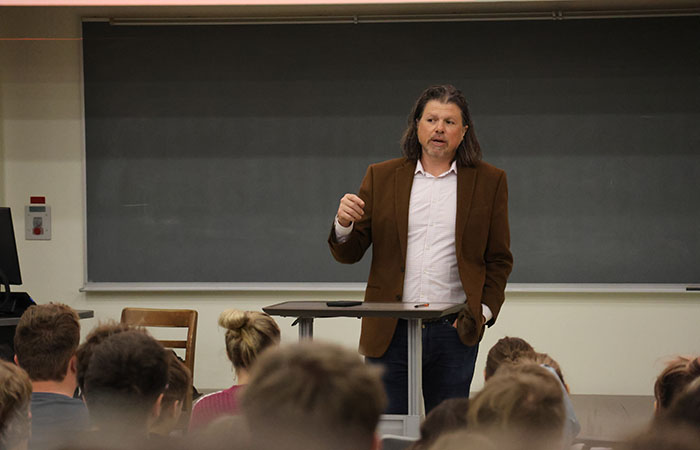
Professor Clavio guest lecturing a room full of students
Galen Clavio, Professor at Indiana University and NIL expert, guest lectures students during a C250 StoryLab class. During his lecture, Clavio addresses the rights athletes have to make money based on name, image and likeness. Photo by Emma Pearce

Many professionals working in the athletic area believe regardless of the motivation behind someone’s work, they have the right to be able to make money off of themselves. This is the case with Galen Clavio, professor at Indiana University and NIL expert. He said, “Everybody in this room as an adult has rights of publicity. You have the right to profit off of your name, what you look like, and how your likeness is utilized within any form of media or advertising or business.” It could be said that the age of college athletes is too immature to be able to make a certain amount of money. That they’re too impressionable and may prioritize the potential deals that could be made instead of their passion for the sport. However, does that make it okay for other people to decide if they can or can’t brand themselves? Clavio believes this is a right that already exists and is not granted, “This is not a case of new rights being granted to college athletes. It is instead the removal of restrictions that were being imposed by college athletic departments upon college athletes. Essentially telling those people you do not get the same rights as the other people that are college students.” Athletes like Tyler Cherry and Kai Connor uphold this notion that the passion for a sport exceeds the prospect of making money in college. This freshman football player and junior track competitor provide the same insights that getting deals is just an additional prospect to the hard work, dedication, and commitment put into college athletics. In addition to the fact that according to Clavio, this restricted right should be given regardless of the motivation. These professionals point to incentive and effort not being an issue within NIL.

Interviewees express their opinions on NIL. They explain why or why not they like NIL, along with how they think it affects a college athlete’s motivation for their sport.

###
Club Sports Could Pay The Price For NIL

By Makenna Piatkowski, Ryan Banks and Matthew Mason

BLOOMINGTON, IN (Nov. 5, 2024)

The buzzer sounds and hockey players storm the ice to celebrate with teammates. Indiana University is officially bringing home some hardware as the club hockey team wins the American Collegiate Hockey Association (ACHA) National Championship. A team with so much talent finally wins it all, and they didn’t even pay the players to do it.

An athlete’s name, image and likeness (NIL) allows for college players to be paid for anything attached to their brand, such as personal merchandise, camps and clinics or any type of affiliate roles. Before NIL was put into effect, athletes were prohibited from profiting off of their personal brand, and could even face punishments if it occurred. One example of this is Reggie Bush, who had his Heisman Trophy taken away (it has since been returned in the wake of athletes getting paid) after he was illegally compensated. Collegiate athletes are now allowed to hire outside expertise to advise them in deals surrounding NIL, and most college athletes are benefiting from this law change. The biggest advocates for NIL argue that athletes that spend countless hours in practices and games should be compensated fairly for their time and inability to acquire a job outside of school and sport. 

Many have spoken up about NIL and the effect it has had on student athletes, including Indiana University Media School professor, Galen Clavio. Clavio uses his many years of experience as a broadcaster and reporter in the sports industry to speak on various topics, both in his own classes and in guest speeches to students in other media classes. In a press conference held in a C250 Story Lab class, students were able to ask questions about NIL and what the future holds.

Professor Galen Clavio conducts a press conference with C250 students about name, image, and likeness.
Professor Galen Clavio talks with students at IU Bloomington about NIL. Clavio has spent years in the sports industry and currently works at IU as the Director of Undergraduate Studies for the Media School. Photo taken by Mike Badrov.

“What keeps the boat in the water is the tens of thousands or hundreds of thousands of dollars of donations coming from the alumnus who feel positive emotions towards their university.”

However, some people have some issues with how NIL works. NIL deals only benefit those in high level collegiate sports, and tends to ignore other sports, like the 40 club sports at Indiana University. When asked about how new collegiate funding ideas would affect smaller sports, Clavio noted that a lot of lower level sports could see major cuts.

“The NCAA has been throwing everything they can at trying to get some kind of antitrust exemption or some kind of carve out from the government because if they don’t get that…it’s going to be a fundamental reorganization of a lot of what we see in college athletics where you could see a lot of college athletic programs kind of convert back down to what we would consider to be ‘Club Status’.”

Due to the underfunding of collegiate club sports, athletes like Peter Faust, a club lacrosse player at IU, have had to sacrifice personal time and money to the sports that are played. 

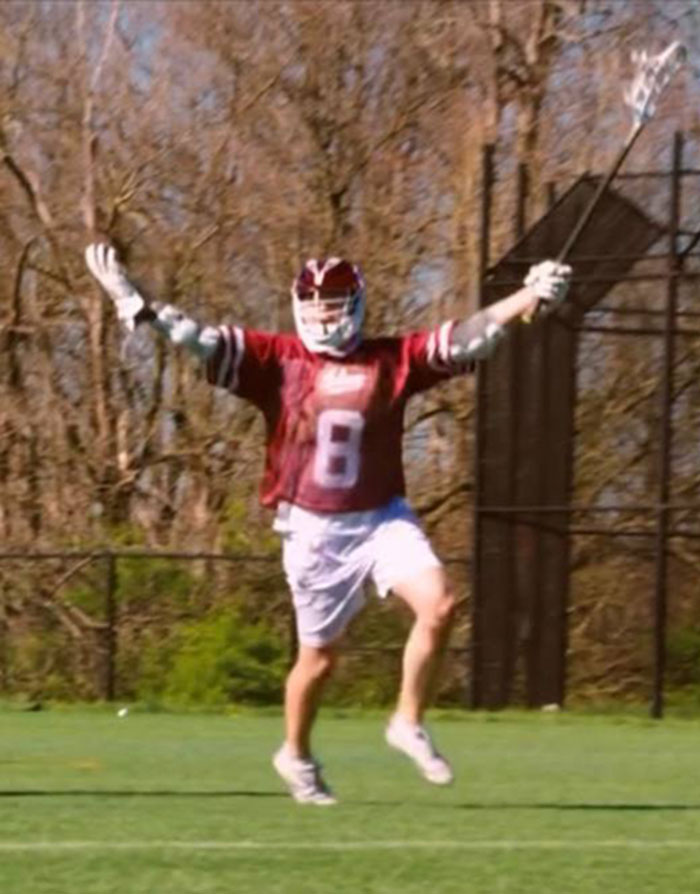
Peter Faust, a club lacrosse player at IU, celebrates on the field.
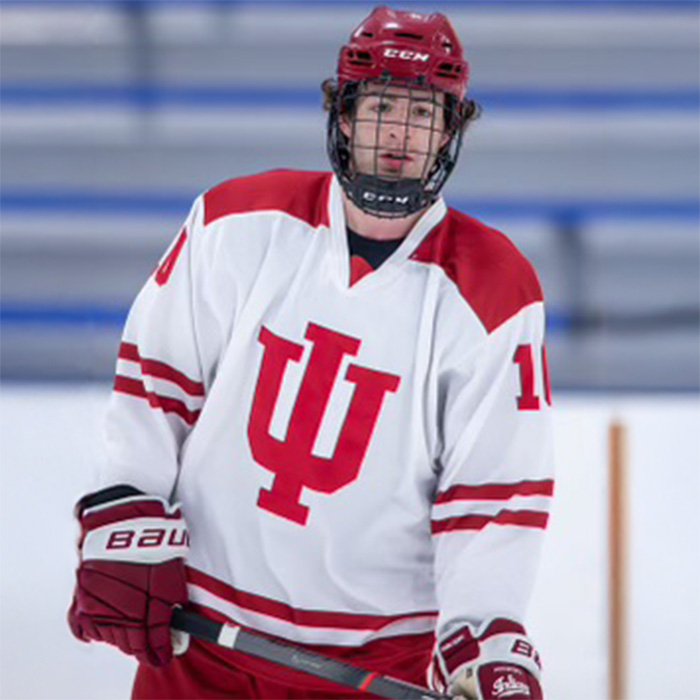
Peter Faust, a club lacrosse player at IU, celebrates on the field. Faust is a student athlete at Indiana and receives no NIL money. Picture Courtesy of Peter Faust

“Club sports run pretty similarly but lacrosse in particular is rather expensive to be a part of. Each member of the team owes dues each semester and that only covers field time and travel. The uniforms and their equipment are further expenses out of their pockets.”

Without funding from the university, athletes that want to continue to play the sport they love continue to cost them. Although the high level sports seem like an unattainable schedule, Andrew Gus, IU Club Hockey Forward Coach, does not think that they are all that different. 

“We practice 4 days a week and have to travel on weekends. We have given up on some big things in college because we had to travel that weekend, but it’s all worth it. It would be nice to see the school compensate for that.”

Gus also acknowledges the discrepancy between the recognition that some sports get over others and what the university chooses to prioritize, in terms of media coverage. 

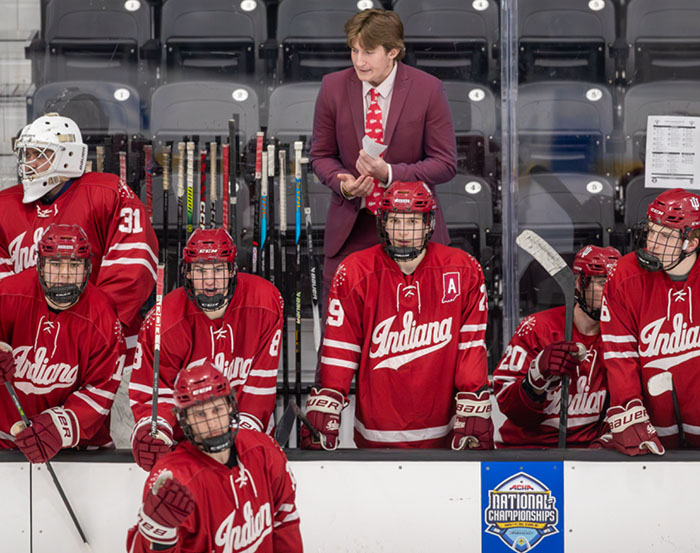
Andrew Gus, the IU Club Hockey Forward Coach, cheers on his players.
Andrew Gus, the IU Club Hockey Forward Coach, looks on as his team plays. Gus believes the club hockey team is not all that different from a division one level sport. Picture Courtesy of Andrew Gus

“Look at the football team right now, it is awesome. But the hockey team won the national championship last season and not as many people know about that. The school could have helped with spreading that news.”

NIL has greatly affected the culture when it comes to collegiate sports, in both positive and negative ways. However, it is notable that club sports and the lower level division sports may face many challenges due to this new era in college athletics.

People on the street speak their mind about whether NIL is fair for club level sports and consider the effects that a lack of funding could have. Multiple perspectives were administered during the afternoon interviews.

###

IU’s Forgotten Club Sports and Their Athletes, D1 in Their Own Right

By Jon-Duke Rogers, Sterling Thomas and Kaela Winfield

BLOOMINGTON, Ind. (November 5, 2024)

You’ve just won the D1 women’s hockey national championship—the first time in your school’s history that a women’s team has achieved this. It’s the highlight of your life. You’ve trained since you were five years old, often as the only girl on a team of boys. You’ve driven twenty hours just to be seen by a female scout, as scouts rarely come to watch girls play. Finally, this is the moment you’ve been waiting for. While this moment signifies a victory for you and your team, it also exposes a gap in how women’s sports are treated. The men’s team had also won, and for them there was a parade; for them, there was a statue. That is the truth Taylor Kinkade had to share with us.

Women’s sports are at an all-time high in terms of interest as athletes like Caitlin Clarke pioneer and usher in a new era. However, that is not the issue at hand; the issue is Indiana University’s unwillingness to be pioneers themselves. Despite offering 24 D1 sports, a noticeable gap still exists: men’s and women’s lacrosse, men’s and women’s hockey, and men’s volleyball are missing. Ironically, each of these sports is more widely represented across Indiana colleges than water polo, which IU does offer as a D1 sport. The main issues that arise when these sports are offered only as club sports are the lack of mental health care, funding, and educational support.

Richie Fleming, a senior on IU’s club lacrosse team, echoes the same attitudes as almost all of the club athletes we talked to; they do not attend Indiana University because it has a great program for the sport they are interested in or because they want to go pro. They play club sports because that is their passion.

Flemming in his Indiana University lacrosse gear
Richie Flemming, a member of the club lacrosse team, is still dedicated to his sport, even though he does not receive compensation through NIL like D1 sports do. Flemming’s commitment reflects the passion and drive of club athletes who play purely for the love of the game. Photo taken by Sterling Thomas

When asked if not having NIL opportunities affected his motivation or commitment to his sport in any way, Fleming stated, “No, if I were getting paid I would be happier to do it, but I play lacrosse because I enjoy it, not for any compensation.” He continued to explain that there isn’t really a point in playing a club sport if you don’t enjoy it, as there isn’t much hope for a professional career or anything else.

Fleming believes that the NIL ruling has not really impacted the club sport environment at IU, claiming it’s always been an uphill battle. It is the clubs’ responsibility during the season to handle everything themselves: raising money, covering fees, and managing expenses, without support from the university. “We get it done, whether that means having to practice in the rain or beg people to donate—we always find a way,” Fleming states.

The funding of club sports is a key aspect of their mistreatment. The IU Club Sports Association gives each sport a small stipend, and in the case of the lacrosse team, it only covers around two months of practice; for the men’s hockey team, it covers five ice skating sessions. The school claims this money is the perfect amount, yet it doesn’t even last the preseason for each sport, often because they have to rent practice spaces.

Fleming believes that IU could be more flexible with funding for the teams while also providing them access to better facilities. “There aren’t many indoor practice facilities, so they are required to take what they can get. Sometimes practices go from midnight to 1:30 A.M. The staff that runs these events is also unreliable, sometimes causing games to have to be relocated or just canceled altogether, which is bad because it’s other club sports that are paying to travel here, and then we just have to say sorry and hope we can reschedule and they can get some of their money back.”

Ryan Berke, a sophomore at IU, played professional hockey for a year after high school. He loved it, but in the end, he knew he’d have to go to college. IU’s Kelley School of Business is one of the best in the country, so there was no hesitation—he knew that’s where he wanted to go. He was crushed when he found out there was no D1 hockey team at IU. He decided to join the club team and has since become one of the most active members and a key player in most games.

“We play at a local ice rink; it’s not small but also not large, yet we almost always sell out. That’s the craziest part—the issue isn’t that there is no interest; it’s that higher-ups just choose to act like no one cares and that we are just another one of the hundreds of clubs at IU,” Berke explained.

IU Club Hockey Team member out on the ice
Ryan Berke, a dedicated member of Indiana University’s club hockey team, steps onto the rink in March 2024. He and his fellow teammates were about to compete in the national championship tournament, something they had been training for all season. Photo courtesy of Chip Delorenzo

The issue of hockey at IU is often a topic of discussion. Research shows that IU sells nine different styles of officially licensed hockey jerseys, each costing a minimum of $100, yet there is no official IU team, and the club team receives none of that revenue. Jerseys are a challenge in themselves; the club team has to design and produce their own to sell them for profit. Each design, however, must be pre-approved and inspected by IU athletics, along with a fee paid to the IU Club Sports Association for the use of IU symbols.

Both Berke and Fleming were asked about their experience as club sport athletes at IU. Overall, they are not given the same access to support as IU athletes: they receive no special accommodations, no extra food, no special tutors, and, worse, they are told that it’s up to the professors’ discretion if they are allowed to miss class. They are required to fill out a form similar to IU athletes to inform teachers of missed classes. However, unlike IU athletes, professors are allowed to deny the form and mark them as absent and unexcused.

“That’s another thing that just isn’t fair. I know plenty of athletes, and the amount of special care they get is insane. I often end up tutoring the other guys, and we have big study sessions because, of course, school comes first. It’s just not fair that we can do everything right, and then it’s in the hands of the teacher,” Berke says.

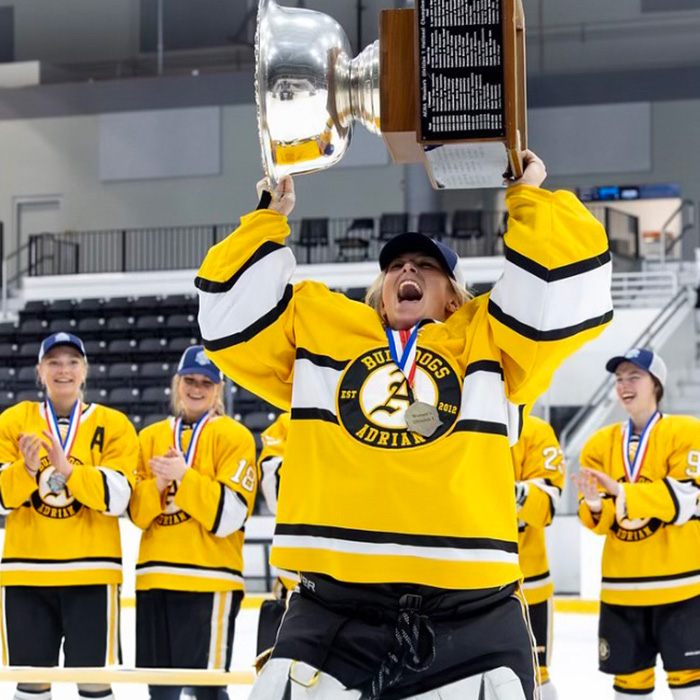
Taylor Kinkade is a D1 women’s hockey player at Adrian College in Michigan. Despite the school’s Division 3 status, the hockey teams compete at the highest level. Recently, she and her team won the National Championship and were honored with a ring ceremony. However, their celebration pales in comparison to that of their male counterparts, who were recognized with a ring ceremony, a rock statue, and a parade. According to Kinkade, this unfair treatment is nothing new, as she says, “Growing up, I’m used to being the only woman. This time, it just hurt a lot more because it wasn’t a matter of ‘They are just better than you’; it was a matter of ‘We just care more about them for doing the same thing.’” Kinkade shared her experience as a woman in a male-dominated sport, highlighting several differences. For example, the women’s team has a two-stick limit, while the men’s team has an unlimited stick policy. Additionally, she noted that the women had to drive 18 hours to compete in a tournament, whereas the boys flew to their tournament last year.

Taylor and teammates after a big win
Taylor Kincade, a D1 women’s hockey player at Adrain College, ecstatically holds the trophy after winning the National Championship. Compared to the men’s team, however, the women received far less recognition for their hard work and sacrifices. Photo courtesy of Gino Capicchioni

Kinkade believes that right now is the perfect time for women’s sports to be awarded for their dedication to their sport, as all eyes are on them. She and her team did what people deemed impossible and wanted to keep the momentum going. Recently, in August 2023, the Professional Women’s Hockey League was founded. As the first professional women’s hockey league, its creation has sparked the conversation of making women’s hockey a bigger deal at larger universities.

“Bigger schools decide that having women in sports is too hard, so they shut it down at the root. We can’t have the ‘Why is there not a women’s hockey or lacrosse team’ conversation if there is never a hockey or lacrosse team to begin with,” Kinkade stated.

By demoting D1 sports to club sports at IU, not only does it impact the athletes directly by not offering them the proper support, whether financially or mentally, but it also impacts women’s sports more heavily as a whole. By choosing to remove themselves from the conversations surrounding those sports entirely, IU is not only leaving their students at a disadvantage—they are choosing to stay behind in an era of massive change.

It is the job of Indiana University to treat all sports as equal and to offer all D1 sports in order to create a safe and equal environment for all athletes, regardless of gender. It starts at the root, and in order to be on the same playing field and have women’s equality in sports, we first have to have equality in what sports are represented at IU.

https://www.youtube.com/watch?v=0WpNGwarepQ

In mid-October, everyday students on Indiana University’s campus were asked how they personally viewed the life college athletes. The students shared their perspectives on the challenges, expectations, and lifestyles they believe college athletes experience at IU.


Smaller Sports Utilizing NIL & How Funding Could Soon Be Cut

By: Maddi Sponsel, Sophia Galvanek, Gavin Worrel

Name. Image. Likeness. 3 words that have engulfed the college sports world in the past 4 years. The once thought of dream idea for college athletes to be compensated for their identity has come true and has provided unique impacts for smaller sports but funding could soon become a problem.

Grace Urbanski is a student photo intern with the Cuban Center and is majoring in sports media at Indiana University. She also is the director of the Little 500 network and a media school ambassador. Grace covers all 24 sports at Indiana University as part of her job and can say for certain that more popular sports like football receive way more sponsorships compared to less revenue-generating sports like field hockey. Grace thinks that NIL is a phenomenal opportunity for athletes to be rewarded for their efforts and time invested in sports. She constantly sees that NIL allows athletes to showcase their personalities, how they play on the field, and community engagement, which is extremely beneficial for them.

Grace Urbanski shown photographing for Indiana Athletics on a rainy day
Grace Urbanski working for Indiana Athletics photography taking pictures during a rainy soccer match. Urbanski loves the support that she sees in the smaller teams when an athlete gets an NIL deal. Courtesy Indiana Athletics.

Grace also talks about how teammates often repost each other’s NIL deals on social media, showing a supportive environment. She also highlights that the Little 500 network, which is not an NCAA Division 1 team, has a stronger team bond as they participate for the love of the game rather than the financial gain aspect. “This lack of sponsorship opportunities in Little 500 makes their team bonds more genuine and unified,” says Grace Urbanski. She also states that non NCAA division teams are still working just as hard if not harder. 

Ara Cowper is a social media intern in the Championships and Alliances department. She was a former student athlete at Indiana University where she was on the rowing team and also an intern at the Mark Cuban Center for Sports Media and Technology where she worked with the social media team. She remembers during her junior year that NIL became more of a significant thing in terms of having to have training with each team and talked about how you want to represent yourself. They explained to her that this is how she could get deals. Ara states that during her senior year, “It became a much bigger conversation”, more stories and more publicity came out for college athletes.

Ara Cowper and the Indiana Rowing team competing on a cloudy misty day in Bloomington.
Ara Cowper, shown in the front, of the Indiana Rowing team during the invitational at Lake Lemon in Bloomington, IN. Cowper understands why NIL isn’t big with the rowing team but that doesn’t stop her from trying to make money for herself. Photo By Dalton Wainscott

Ara also mentions that out of 70-80 rowers, only she and one other teammate had NIL deals. Ara explains because rowing is a newer sport and there aren’t many rowers that NIL did not really affect her but she found it really cool to see it grow and her experiences that she had that involved a couple deals. Ara Cowper discusses her NIL deals, including one with Bloomington Bagel Company and her participation in the IU NIL store. She was also part of the third cohort of the Meta-NIL Empower group, a program focused on branding, career development, and NIL strategies. She explains how her understanding of NIL and social media strategy evolved, allowing her to better navigate and leverage NIL deals. For these applications, Ara says “you have to turn in your social media profiles and talk about why you would be good for the deal”. After getting rejected twice, she was finally accepted in her last year of college. Ara also went through many mental and physical struggles as she got injured plenty of times in rowing, and thinks it’s really important to emphasize and talk about these things. To get through these struggles, she got a guinea pig and this became her niche because people would come up to her and say “you’re the rower with the guinea pig”. Ara also emphasizes “college athletics never stay the same”, It is always changing and she found it interesting to see how all this played out because at the beginning there were not a lot of rules around it. 

Galen Clavio is an Associate Professor in the Media School at Indiana University, where he serves as the Associate Dean for Undergraduate Education and the Director of the Sports Media program. Clavio discussed the Supreme Court’s decision on NIL 4 years ago, which marked a turning point for the NCAA. With these changes occurring in college athletics relating to name, image, and likeness rights, more proposed settlements can redefine financial structures for athletes. He says that this is all influenced by “ongoing legal challenges and shifting cultural dynamics in college sports”. But with this comes challenges. The NCAA is struggling to maintain financial control over college athletics. With growing external pressures to compensate athletes directly that matches their market value. Clavio also adds that legal challenges may also hurt their attempts to regulate payments to players, this complicates future settlements.

Dr. Galen Clavio talking to C250 Story Lab students about NIL in a press conference
Dr. Galen Clavio talking to C250 students during a press conference about NIL. Clavio regularly keeps up with NIL to give simpler comprehension to those that don’t. Photo by Emma Pearce.

Clavio addresses that similar to past unsuccessful attempts to impose restrictions, the NCAA “efforts to limit athlete compensation face legal challenges” because the courts always rule against limiting earnings in college sports. He also talks about how many athletic departments are required to find significant funds for NIL payments, which is proposed at $22 million per year. This strains budgets that are already struggling to keep up. Clavio says this leads to potential cuts in other sports making it tough to make decisions about where to allocate these resources and ensuring it is all balanced between various sports programs while also complying with NIL regulations. Clavio also goes into detail about how bigger schools can offer more financial resources for NIL than others. This creates disadvantages for smaller programs that can not compete financially, creating a decline in their athletic competitiveness.

Interview video of people on the street in Bloomington, Indiana about NIL. People were interviewed about their thoughts on equal access to NIL and how budgets could be effect.

NIL Generates Competition Between Sports and Crumbles Team Dynamics at Indiana University

By Adelyn Rabbitt, Maddie Greenberg and Nicole Dettmer

BLOOMINGTON, IN (Nov. 5, 2024)

Under bright fluorescent flood lights, the Indiana University men’s soccer team gathered to smile for a group picture after defeating Northwestern. Junior Jack Wagoner grinned along with his teammates as they celebrated the 6-1 win, which earned them their share of the Big Ten regular season title. This was monumental for the team, as it clinched their near-perfect October record.

As the crowd cheered, photos were taken by media personnel covering the big win. Media has played a huge part in college athletics ever since the Supreme Court ruled against the National Collegiate Athletic Association’s (NCAA) attempt to limit education-related payments to student athletes. This ruling became known as name, image and likeness, or NIL. The ruling went into effect on July 1, 2021, and allowed college athletes to use their public name, image and likeness to gain sponsorships and increase their financial gain from their sport. Deciding whether or not to implement NIL is a choice given to colleges, meaning some colleges have no NIL rules while others have widespread NIL rules. Though most athletes seemed to appreciate the ruling, controversy quickly arose with claims of the ruling’s unfairness and inequality.

who what when where why
Amelia Taylor, third-year law student and J.D. candidate, poses for a professional photo. Taylor is an IU student well-versed in the matters of NIL.

A third-year law student and J.D. candidate well-versed in NIL, Amelia Taylor, explained how NIL works. “The law basically says the NCAA can’t require or stop student athletes from doing something that is not for the purpose of the NCAA,” Taylor said. This means the NCAA cannot control the name, image and likeness of individual players. The NIL ruling gives student athletes the legal right to use their image in the media for financial gain. As for public controversy, Taylor said, “Even since this started, there’s been just as much backlash as public optimism about it.”

IU heavily implements NIL rules. Men’s basketball and football are the most popular sports overall at IU, and the athletes’ pay shows that. In less popularized sports, such as men’s soccer or any women’s sport, the pay is generally lower. This is often because less popular sports get less television time, making them much less likely to be spotted by brands. Additionally, more popular players on a team receive better NIL deals than less well-known players. Jack Wagoner, an IU men’s soccer player, commented on NIL, expressing his support for the ruling. “I believe it is the right way to handle paying college athletes,” Wagoner wrote in an email.

IU men’s soccer midfielder Jack Wagoner gears up to make a play during a game between the Kentucky Wildcats and the Indiana Hoosiers. Wagoner is a junior with multiple NIL deals.

Though men’s soccer NIL deals are commonly much less financially fulfilling than the NIL deals of more popularized sports, NIL still provides beneficial finances to many athletes. Wagoner has a few NIL deals, including one called ‘Hoosiers for Good’ and other local partnerships. Wagoner highlighted his appreciation for local NIL partnerships, including the example of athletes receiving deals from Everbowl, a popular acai bowl shop on Kirkwood, in return for promoting Everbowl on social media. “These mean much more to me than just being paid upfront,” Wagoner wrote. “I feel like I am more effectively giving back to the community around me.” Wagoner is aware that he is paid less than other male athletes at IU, and he highlighted IU men’s soccer and swimming in his response. “Both programs have a very rich history and are the powerhouses in their relative sports, so deserve to have more NIL opportunities,” Wagoner wrote. However, Wagoner understands that basketball and football are more central in media coverage and therefore thinks NIL is fair, as many players have built their success and image throughout the years.

Jeremy Gray, IU Athletic Director, poses for a picture at an IU football game. Gray held an online press conference to explain NIL to Story Lab students.

Opposingly, other student athletes do not share the same sentiments. Jeremy Gray, IU Athletic Director, commented on the unseen NIL disparities between IU student athletes in an online press conference. Gray said sports psychologists have seen mental health struggles in IU student athletes skyrocket post-NIL ruling as the players scramble to acquire the same deals as their teammates. “Teaching them how to accentuate their own brand is really really important,” Gray said. Regarding teammate relationships, Gray said NIL can “change the dynamic” between teammates, as NIL has turned finances into a competitive playing field. Taylor also expressed the sentiment of changed dynamics due to the NIL ruling. “The issue was… is it going to ruin teamwork and ruin locker room situations and dynamics because now a player is mad that their teammate is making much more money but not doing anything different?” said Taylor.

When NIL began, it became clear that the ruling was unfair to women. Though women’s pay was already unequal to men’s pay, NIL showed that women’s sports are often less popularized than men’s sports. “This (NIL) is just going to continue making the disparity between especially gender even wider,” Taylor said. Taylor brought up the struggles less popular teams are having with recruiting athletes as a result of NIL, saying the teams could cease to exist as a result of the athletes’ pay disparities between schools. Of course, there are exceptions to this. IU women’s basketball players are likely to make much more money than men’s soccer or tennis players due to basketball being more popularized than soccer or tennis. However, within specific sports, such as basketball or soccer, men are paid more. There are athletes like Caitlin Clark who take the media by storm and end up landing NIL deals that are more than some men’s deals within the same sport, but it is extremely uncommon.

People walking on Kirkwood comment on their perception of NIL. The topic of NIL is generally well-known by IU students and residents of Bloomington.

NIL Ruling Puts New level of Stress on Athletes

By Matilyn Martin, Max Kirsch and Whitney Householder

BLOOMINGTON, Ind (November 5, 2024)-

For a long time, college athletes have played their sport and built a strong fanbase for themselves by attracting fans with the skill level they play their sport with and also how they go about their daily lives and interact with people. However, these athletes were not getting paid for anything despite the program that they were apart of being worth millions of dollars. Now things have changed for the better. In the past couple of years, there was a change to college athletic programs that completely changed the way that fans were able to view their favorite athletes.

With the not so recent law change affecting college athletes, there still seems to be some confusion regarding college athletes and how they can promote themselves through their sport for profit. In June 2021, the Supreme Court passed a ruling that all college athletes have the ability to profit off of their name, image, and likeness (NIL). This law especially helped out large campuses like Indiana University. With Indiana University being a large Big Ten school, this ruling allowed the university’s athletic department to bring in more popular athletes and to also market said athletes and set them up for a future not only with their sport, yet how they can market themselves in their own social media.

Although this sounds like a good thing for student athletes and is, it does leave room for questions about certain aspects of the ruling. Is there an increased pressure to perform, knowing that there could be financial risks at stake? NIL deals are of course a good thing for the athlete, but there is always something to counteract the positives. In this situation, the athlete is getting an offer for an NIL deal, but at what cost did it come at? Did the athlete perform in their game a certain way to secure future deals? A deeper dive into this topic could only be done by interviewing the professionals themselves.

Professor answers a question.
Dr. Galen Clavio answers a C250 student’s question about NIL. Clavio is very educated on this topic as he is a sports media professor. Photo courtesy of  Emma Pearce.

An Indiana University Sports Media Professor came to a C250 class and let students ask him questions regarding everything related to NIL. Dr. Galen Clavio, who is the Associate Dean of Undergraduate Students in the Media School, shared his insights on this topic. “Name, image, and likeness in college sports has rapidly become one of the more misunderstood things in college sports over the last four years” Clavio said. This he is right about; there are a lot of subcategories within the NIL umbrella that leave a lot of people still questioning what exactly it is. Clavio touched on the history of NIL and how people questioned the money being made by the schools but not the players. Clavio talked about if this pressure starts even as early as high school. Are high school athletes worried about potential NIL deals in their college careers? He thinks that it does bring a certain pressure to the table, especially for athletes who are good at practicing media. These athletes might expect to bring a certain amount of NIL deals once they get to college, and this could lead to a pressure to perform better. “It’s pressure if you’re a college athlete with a social media following to maintain your audience and build upon your audience.” Clavio said. There is a difference from athlete to athlete. There is the athlete who is good at media and the athlete who is good at their sport. He suggested that the athletes should learn social media practices sooner rather than later, when they are in the midst of earning off of their NIL. This would be helpful to them since this is how the world communicates with each other, so it would give the athletes an insight into how to navigate social media, which in the end would be beneficial when they start getting NIL deals to know how to market themselves and such.

Football player celebrating team.
Mario Landino celebrates after the team scores a touchdown. The Indiana Hoosiers are having a record breaking season. Photo courtesy of Mario Landino.

Mario Landino, a freshman at Indiana University, is a defensive lineman for the Hoosiers football team under a new coaching staff led by Curt Cignetti. Coming out of high school in Pennsylvania, Landino wasn’t too familiar with how NIL changed the game of football once entering collegiate competition. He shared information and experiences about how NIL has affected his career at IU. In his first semester at Bloomington, he has already received an offer from the IU NIL store, “The store is a place student-athletes like myself are able to create gear and post it to the website. So with that being said, I would say I started that just around 1 month ago,” Landino said. While Landino has been lucky enough to acquire such opportunities, they do not come as easy as it seems. When asked how often athletes get deals like his, Landino responded, “Athletes truly must have multiple or high-end deals, need to be in the P4 conferences and be well known for your team. Since it is hard you really need to seek out deals and persuade businesses to work with you.” Getting handed a NIL deal so early in his collegiate career means Landino only has larger expectations as time passes and he adjusts to becoming a starting player. Now that there are financial risks at stake, it could lead to added pressure on and off the field. Additionally, tension could potentially arise between teammates who may have not received similar offers if any at all. “In general there is always pressure and competition within football. Everyone is chasing to make money and be the best player. Naturally, the process will unfold and everyone can have the ability to dabble in NIL,” Landino said. He adds that NIL and money related topics are generally not talked about in the locker room much. He also feels that everyone who gets opportunities worked hard to earn it. From local merchandise deals to partnerships with national corporations, the possibilities for deals are endless. Everybody needs to start somewhere, and Landino seems to be highly optimistic about how his deal has been treating him. “With this type of NIL, it is not a set price you receive. It is based on the sales of your merchandise. Everything I earned feels well deserved as I know how hard we work to get here,” Landino said. Leaving off on a high note, Landino provided genuine words of wisdom as he added, “Every day without trying to further your abilities is another day you miss an opportunity.”

Basketball player scores points.
Oumar Ballo scores two points for the Indiana Hoosiers. Ballo has been a part of the Indiana Hoosiers Men’s Basketball Team for six seasons. Photo courtesy of Oumar Ballo.

Oumar Ballo, currently plays the center position for the Indiana Hoosiers men’s basketball team. Before playing for Indiana University, he played basketball for Arizona, which is where he was when the NIL ruling came into play. “It wasn’t very popular or important at first, didn’t really make much of a difference for a lot of players” Ballo said. He explained how NIL began to change his basketball career and specifically the amount of money he was making. “The experience was different for me because I am a foreigner here, certain offers I had to turn down because the contracts did not align with the stipulations of my work visa” Ballo said. He feels that there is a pressure to perform better in order to make more NIL deals and money. Ballo believes that all of his teammates have this pressure as well. He considers NIL deals as a business and stands by that. When asking him how this affects the energy between him and his teammates, he says how it had never really been competitive between them and that they always liked to see each other receive new opportunities. Ballo talks highly of the NIL experience and the effect it has had on his basketball career. “I feel like I deserve everything that I have gained from transferring to Indiana, there was a lot of money coming in just from coming here and I am very grateful for the opportunity. I have worked very hard to get here and I love playing for the Hoosiers” Ballo said, speaking very highly of his achievements.

There is always pressure to do anything in life. Especially with competition. Athletes will still get NIL deals regardless of anyway that they play their sport because they also have the ability to find opportunities themselves. However, there is a definite connection between the way athletes perform and the NIL deals that they receive. The extremity differs from athlete to athlete but one thing remains the same. Every player feels they have worked hard to earn each opportunity, no matter what.

Bloomington residents give their insights on if there is a connection between performance level and the amount of NIL deals. Indiana Hoosier fans are very loyal to their favorite IU teams.